
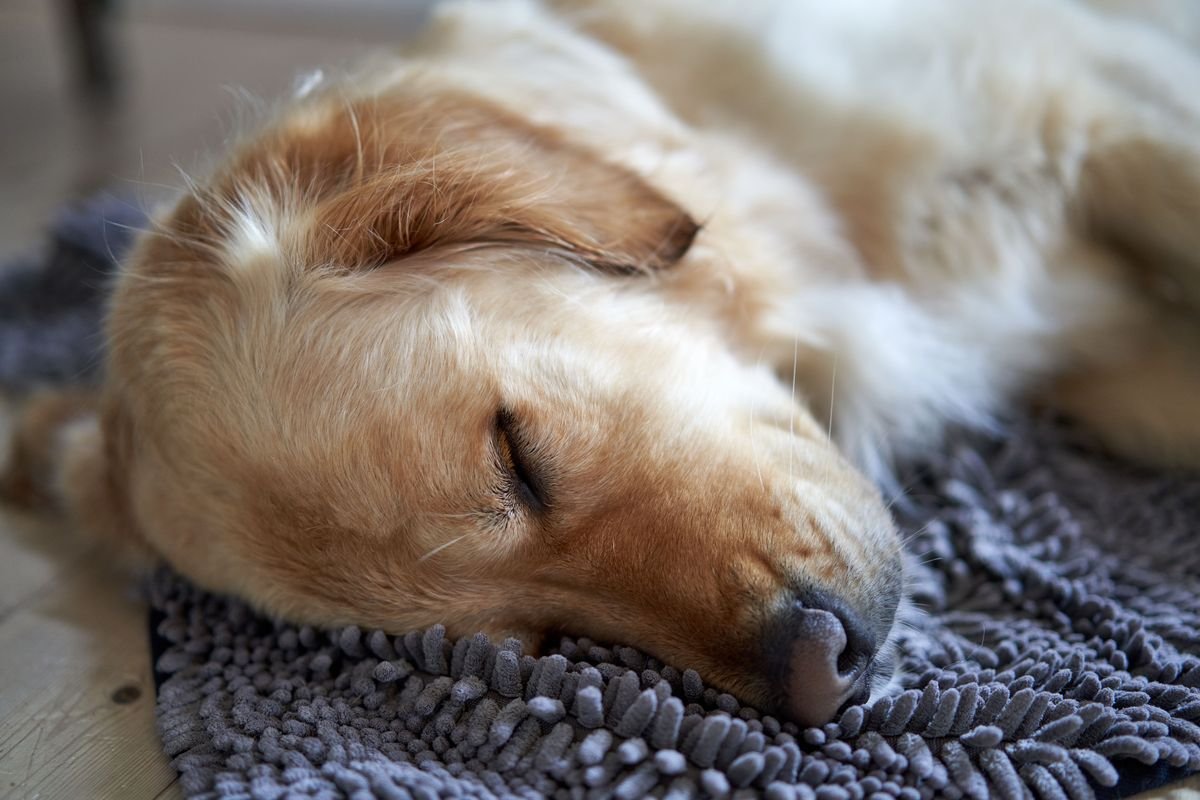
If you have ever watched your dog sleep, you may have noticed them twitching, paddling their legs, or making soft whining noises. This behavior can be endearing, but it can also be concerning if you are not sure what it means. Whining during sleep is actually quite common in dogs. In most cases it is a normal part of the sleep cycle. However, there are times when it could signal an underlying issue that needs attention.
Understanding the reasons behind your dog’s sleep whining can help you decide whether to simply let them dream or whether to take a closer look. Here are the most common explanations for why dogs whine in their sleep.
1. Dreaming and REM Sleep
Dogs experience sleep cycles similar to humans, including a phase called Rapid Eye Movement (REM) sleep. REM sleep is when dreaming occurs. During this stage, brain activity is high, and the body may twitch, paddle, vocalize, or whine. Smaller dogs tend to dream more frequently than larger breeds, but all dogs dream.
Whining during REM sleep is usually nothing to worry about. It is simply your dog acting out their dream. Their eyes may move rapidly behind closed eyelids, and their breathing may become irregular. If your dog seems otherwise healthy and the whining only happens while they are asleep, it is likely just part of a vivid dream. Waking them gently is fine, but sudden wake-ups can startle them. Letting them finish their dream cycle is usually best.
2. Pain or Physical Discomfort
If your dog is whining in their sleep and also shows signs of discomfort when awake, they may be experiencing pain. Conditions such as arthritis, hip dysplasia, dental pain, or an injury can cause discomfort that worsens during rest. Dogs may whine as a response to pain even while asleep.
Look for other clues like stiffness when getting up, limping, reluctance to jump, or changes in appetite. If the whining is accompanied by whimpering or yelping that wakes them up, pain could be the cause. A veterinary checkup can rule out or address any underlying health problems.
Arthritis and Joint Pain
Older dogs are especially prone to arthritis, which can become more uncomfortable when they lie in one position for a while. The joint stiffness may cause them to whine in their sleep. Providing a comfortable orthopedic bed and talking to your vet about pain management options can help reduce this type of whining.
3. Anxiety or Stress
Dogs that are anxious or stressed during the day may carry that tension into their sleep. Separation anxiety, loud noises, changes in routine, or past trauma can all contribute. A dog that whines in their sleep may be reliving a stressful event in a dream or simply expressing their anxiety.
If your dog also shows anxiety while awake (pacing, panting, destructive behavior), the sleep whining could be linked. Creating a calm bedtime routine, offering a safe space, and using calming aids like pheromone diffusers or anxiety wraps may help. In severe cases, consult a veterinarian or a certified dog behaviorist.
4. Seizures or Neurological Issues
Not all twitching and vocalizing during sleep is dreaming. In some cases, it can be a sign of a seizure disorder or other neurological problem. Seizures can occur during sleep and may be subtle, like focal seizures that only affect one part of the body. A dog having a seizure might whine, paddle, stiffen, or drool.
How can you tell the difference? During a normal dream, you can usually wake your dog and they will stop the behavior. If you cannot wake them, or if the movements are rigid and rhythmic, it may be a seizure. Also, if your dog seems confused or disoriented after the episode, or if they lose bladder control, seek veterinary advice immediately.
When to See a Vet for Seizures
If you suspect your dog is having seizures, record a video of the episode to show your veterinarian. Keep a log of frequency and duration. Seizures can often be managed with medication. Early diagnosis makes a big difference in quality of life.
5. Puppy Sleep Development
Puppies are still developing their nervous systems and often have more active sleep than adult dogs. They also have more REM sleep because their brains are growing and processing new information. It is very common for puppies to whine, bark, or twitch during their naps. This is perfectly normal and usually decreases as they mature.
If your puppy whines in their sleep, let them rest. Interrupting their sleep too often can make them cranky or affect their learning. As long as they are healthy and energetic when awake, there is no cause for concern.
6. Vocalization Breed Tendencies
Some dog breeds are naturally more vocal than others. Breeds like Beagles, Huskies, and Dachshunds may whine more frequently, both awake and asleep. If your dog belongs to a vocal breed, their sleep whining might just be an extension of their chatty personality.
Even mixed-breed dogs can inherit these traits. Consider your dog’s breed background when evaluating whether the whining is unusual. A vocal breed may whine in their sleep without any underlying issue.
7. When to Worry and Consult a Vet
In most cases, whining during sleep is harmless. However, you should consult your veterinarian if you notice any of these signs:
– Whining that is accompanied by stiff or rigid movements that cannot be interrupted
– Episodes that last longer than a few minutes
– Whining that occurs frequently and seems intense
– Your dog seems disoriented, scared, or confused after waking
– Whining during sleep combined with other symptoms like limping, lethargy, or changes in behavior
Your vet can perform a physical exam, possibly run blood work, or recommend a specialist if a neurological problem is suspected. It is always better to err on the side of caution when your dog’s health is involved.
How to Help Your Dog Sleep Peacefully
Even if your dog’s sleep whining is normal, you can take steps to ensure they get restful sleep:
– Provide a comfortable, quiet sleeping area away from noise and disruptions.
– Stick to a consistent daily routine with plenty of exercise and mental stimulation.
– Offer a supportive bed, especially for older dogs with joint pain.
– Use calming aids like lavender-scented bedding (with caution), calming chews, or a white noise machine.
– Avoid waking your dog abruptly from a dream. If you need to wake them, call their name softly or gently touch their back.
If anxiety is the cause, work on desensitization and counter-conditioning exercises. A tired and relaxed dog is more likely to sleep soundly without whining.
Ultimately, knowing why your dog whines in their sleep can give you peace of mind. In most instances, it is just a sign of a busy dream life. With attention to their overall health and comfort, you can help your furry friend sleep peacefully through the night.