
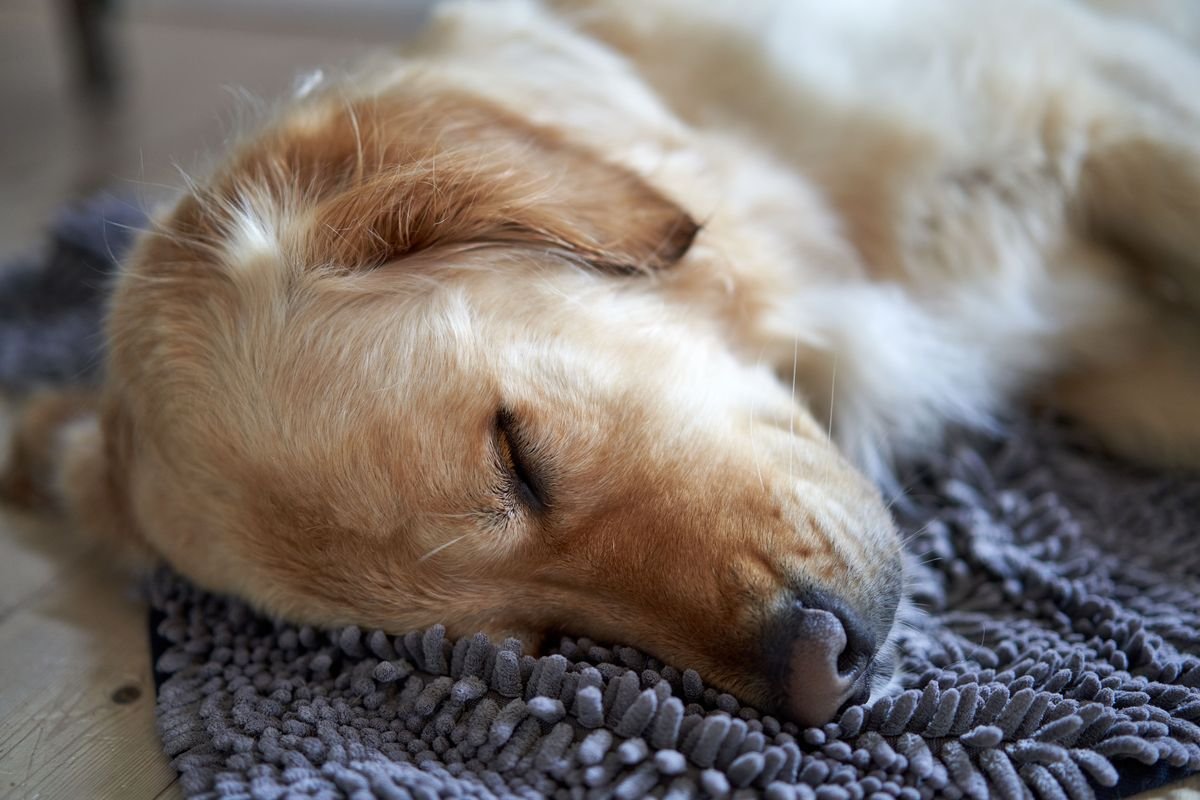
You walk into the living room and see your dog lying on the couch. His eyes are wide open, staring at nothing. Is he awake? Is he watching you? Or is he sleeping? It can be unsettling to see your dog with his eyes open while resting, but this behavior is actually quite common in dogs. Understanding why dogs sleep with their eyes open helps you distinguish between normal canine behavior and potential health concerns.
Dogs have evolved with unique adaptations from their wild ancestors. One such adaptation is the ability to appear awake even while sleeping. This article explores the reasons behind this phenomenon, how the canine eye works, and when you should pay closer attention.
What Is the Third Eyelid and How Does It Work?
Dogs have a special membrane called the third eyelid, or nictitating membrane. This thin, translucent layer sits in the inner corner of the eye and can slide across the eyeball to protect and moisten the surface. When a dog sleeps with its eyes open, the third eyelid may partially cover the eye, giving the appearance of a glazed or rolled-back look.
This membrane allows dogs to keep their eyes open while sleeping because it still provides moisture and protection. It is a natural part of the canine eye anatomy and is not a cause for alarm in most cases.
Is It Normal for Dogs to Sleep With Their Eyes Open?
Yes, for many dogs, sleeping with eyes partially or fully open is completely normal. In fact, some dogs do this regularly, especially during light sleep stages. You might notice that your dog’s eyes twitch or move rapidly behind the lids (or even without lids) during REM sleep. This is similar to humans who sometimes sleep with their eyes slightly open.
However, some dogs never sleep with their eyes open, and that is also normal. Breed, individual sleeping habits, and comfort level all play a role.
Common Reasons Dogs Sleep With Their Eyes Open
There are several reasons why a dog might sleep with its eyes open. Each reason relates to instinct, anatomy, or environment.
Instinctive Vigilance
Dogs are descendants of wolves, and wild canids often sleep with their eyes open to stay alert for threats. Even though your pet is safe inside your home, this instinct can remain. By keeping one eye open (or both), dogs can quickly wake up and respond to any danger. This is especially common in breeds known for guarding or herding.
Relaxed Eyelid Muscles
When a dog is deeply relaxed, the muscles that keep the eyelids closed may loosen. Similar to how some people sleep with their mouths open, dogs can lose muscle tension in their eyelids, causing the eyes to part slightly. The third eyelid then takes over to keep the eye moist.
Sleep Stage and REM
During REM (rapid eye movement) sleep, the brain is highly active. Dogs in REM sleep may exhibit twitching paws, vocalizations, and partly open eyes. In this stage, the eyes may roll back, and the third eyelid is visible. This is a sign that your dog is in a deep, dreaming state.
When Should You Be Concerned?
While sleeping with eyes open is often harmless, there are times when it could signal a medical issue. If your dog is also showing other signs, such as eye discharge, redness, squinting, or pawing at the eyes, it may indicate a problem. Conditions like dry eye (keratoconjunctivitis sicca), eye infections, or neurological disorders can cause abnormal eye position or inability to close the eyes fully.
Additionally, if your dog cannot close its eyes at all, even when awake, that is a veterinary emergency. A condition called lagophthalmos (inability to fully close the eyelids) can lead to corneal damage. If your dog seems to be sleeping with eyes wide open and appears unresponsive or stiff, it could be a seizure or other medical episode.
How to Tell If Your Dog Is Actually Asleep
Sometimes it’s hard to know if your dog is truly asleep or just resting with eyes open. Look for these clues:
– Slow, regular breathing: A sleeping dog’s breaths are deep and rhythmic.
– Twitching or dreaming: Jerking paws, whimpering, or eye movements indicate REM sleep.
– Relaxed body posture: Limp legs, loose muscles, and a floppy tail suggest deep sleep.
– Unresponsiveness: If you call their name or make a soft noise and they do not react, they are likely asleep.
You can gently touch your dog’s shoulder. If they startle awake or slowly look around, they were sleeping. If they immediately respond, they may have been dozing lightly.
Breeds That Are More Likely to Sleep With Eyes Open
While any dog can sleep with its eyes open, some breeds seem to do it more often. Breeds with prominent eyes, such as Pugs, Bulldogs, and Boston Terriers, have shallower eye sockets, which can make it harder to fully close their eyelids. Additionally, breeds that are naturally alert, like Shepherds and Terriers, may keep their eyes open due to their guard dog instincts.
But remember, individual dog personalities and habits matter more than breed averages.
Final Thoughts
Seeing your dog sleep with its eyes open can be surprising, but it is usually a normal part of canine slumber. The third eyelid provides protection, and instinct may keep them partly alert. As long as your dog appears healthy, has no eye irritation, and wakes up normally, there is no need to worry. If you notice any accompanying symptoms like discharge, redness, or behavior changes, consult your veterinarian to rule out underlying conditions.
Understanding your dog’s unique sleep habits helps you become a more attentive and caring owner. So the next time you catch your pup staring blankly while snoozing, you can smile knowing that their wild instincts are just a small part of who they are.