
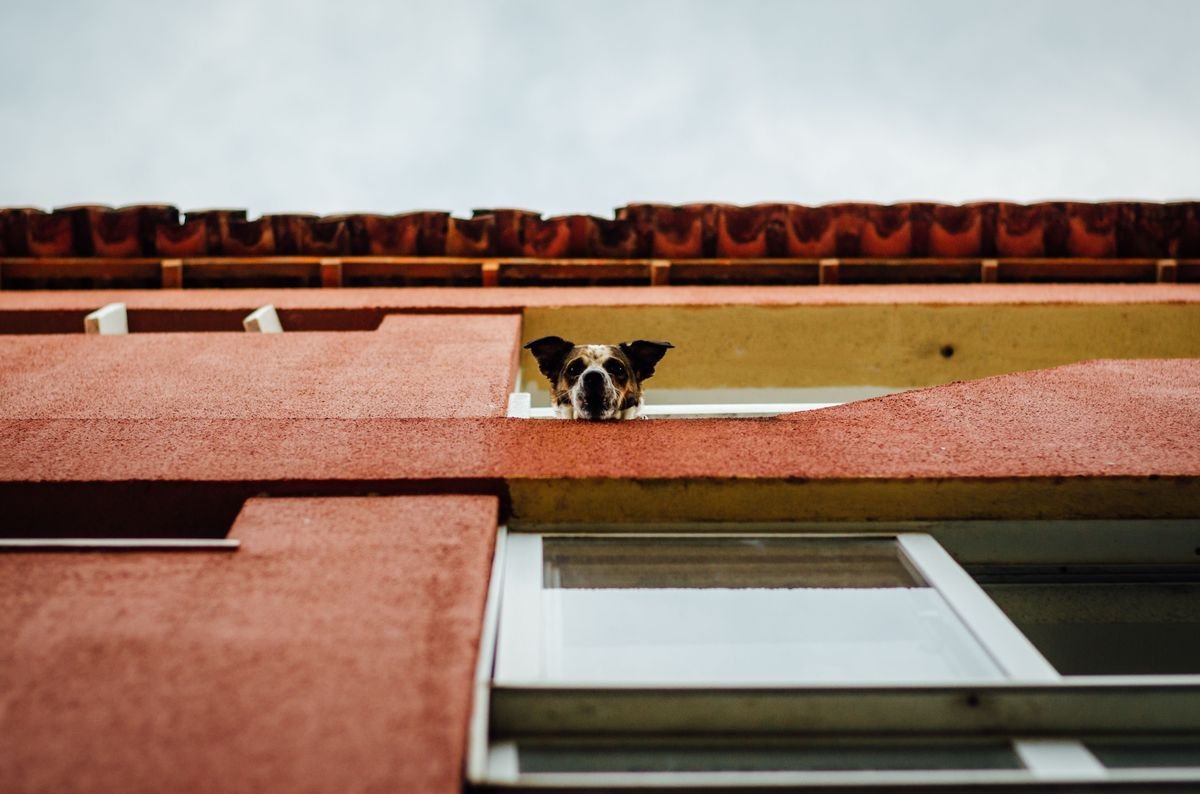
It’s a classic scene: the mailman walks up to the mailbox, and your dog erupts in a frenzy of barking. This behavior is so common that it has become a cultural cliché. But why do dogs bark at the mailman? The answer lies in a mix of instinct, routine, and learned behavior.
Understanding the reasons behind this reaction can help you manage it. It can also strengthen the bond between you and your furry friend. Let’s explore the key factors that trigger this response.
The Territorial Instinct
Dogs are naturally territorial animals. Their wild ancestors relied on defending their home range for survival. This instinct remains strong in domestic dogs. They view your home and yard as their territory. Any unfamiliar person or animal entering that space can trigger a protective response.
When the mailman approaches, your dog perceives him as an intruder. Barking is the dog’s way of warning the ‘intruder’ to stay away. It is also a way to alert you, the pack leader, of a potential threat.
Protecting the Home
Your dog doesn’t know that the mailman is just delivering bills or packages. To the dog, he is a stranger encroaching on sacred ground. This territorial barking is often most intense when the mailman comes to the door or reaches into the mailbox near the house.
The Mailman as an Intruder
Unlike a guest who enters the home, the mailman typically stops at the boundary. Even so, dogs may see him as a repeated, predictable intruder. The uniform, the vehicle, the repetitive schedule all reinforce the idea that this person is a consistent trespasser.
The Novelty Factor
Dogs thrive on routine and familiarity. The mailman’s arrival breaks the daily pattern. This novelty can be exciting or alarming for a dog. The unexpected sound of footsteps, the mail slot flap, or the engine of the mail truck all contribute to a heightened state of alertness.
Routine Interruption
Many dogs become accustomed to the rhythm of the household. The mailman’s appearance is a predictable yet distinct event. Your dog may learn to anticipate the mailman’s arrival, sometimes starting to bark even before the mailman reaches the house. This anticipation shows that the dog has learned the pattern.
The Uniform and Vehicle
The mailman’s distinctive uniform and vehicle are visual cues. Dogs have keen eyesight and memory. They may associate these specific sights with the impending approach. The mail truck’s sound can also become a trigger. Over time, your dog can learn to recognize these signals and react accordingly.
Learned Behavior and Reinforcement
Barking at the mailman is often a self-reinforcing behavior. When your dog barks and the mailman leaves, the dog learns that barking made the ‘intruder’ go away. This perceived success strengthens the behavior. The mailman’s retreat becomes a reward for the dog’s warning bark.
The Mailman’s Retreat
From the dog’s perspective, the sequence is clear: bark, and the stranger leaves. The dog doesn’t understand that the mailman was always going to leave after delivering the mail. This reinforcement makes the behavior more ingrained over time. It can become a deeply rooted habit.
Dog’s Reward
The reward for barking is not just the mailman’s departure. The excitement and adrenaline of the barking episode itself can be stimulating. Some dogs bark because it feels good. The release of energy and the sense of control can be inherently satisfying.
Anxiety and Fear
Not all barking is about territory or excitement. Some dogs bark at the mailman out of fear or anxiety. The mailman represents an unpredictable element. For a nervous dog, the approach can be stressful. Barking can be a way to express discomfort and to try to keep the feared object at a distance.
Loud Noises
The mailman may make unfamiliar sounds: the clank of the mailbox, the shuffle of letters, the doorbell ring. These noises can startle a sensitive dog. The barking then becomes a response to the sudden auditory stimuli.
Lack of Socialization
Dogs that were not properly socialized to different people, uniforms, and situations may be more prone to fearful barking. The mailman’s uniform and behavior may be outside the dog’s normal experience. Early positive exposure to various types of people can reduce this fear.
How to Reduce Mailman Barking
If your dog’s barking at the mailman is excessive, there are strategies to manage it. The goal is not to eliminate barking entirely but to reduce it to a more acceptable level. Consistency and patience are key.
Desensitization and Counterconditioning
Desensitization involves gradually exposing your dog to the mailman’s triggers at a low intensity. Start at a distance where your dog notices but doesn’t react. Pair the trigger with high-value treats. Slowly decrease the distance over time. Counterconditioning changes your dog’s emotional response from negative to positive. The sight of the mailman should signal that good things are coming.
Provide a Distraction
Before the mailman arrives, redirect your dog’s attention. Offer a favorite chew toy or a puzzle filled with treats. This gives your dog something else to focus on. You can also practice a ‘quiet’ command and reward calm behavior. Over time, your dog will learn that staying quiet leads to rewards.
Professional Help
If the barking is severe or accompanied by aggression, consult a professional dog trainer or behaviorist. They can assess your dog’s specific triggers and create a tailored plan. In some cases, anxiety medication may be recommended by a veterinarian. Do not punish your dog for barking, as it can worsen anxiety.