
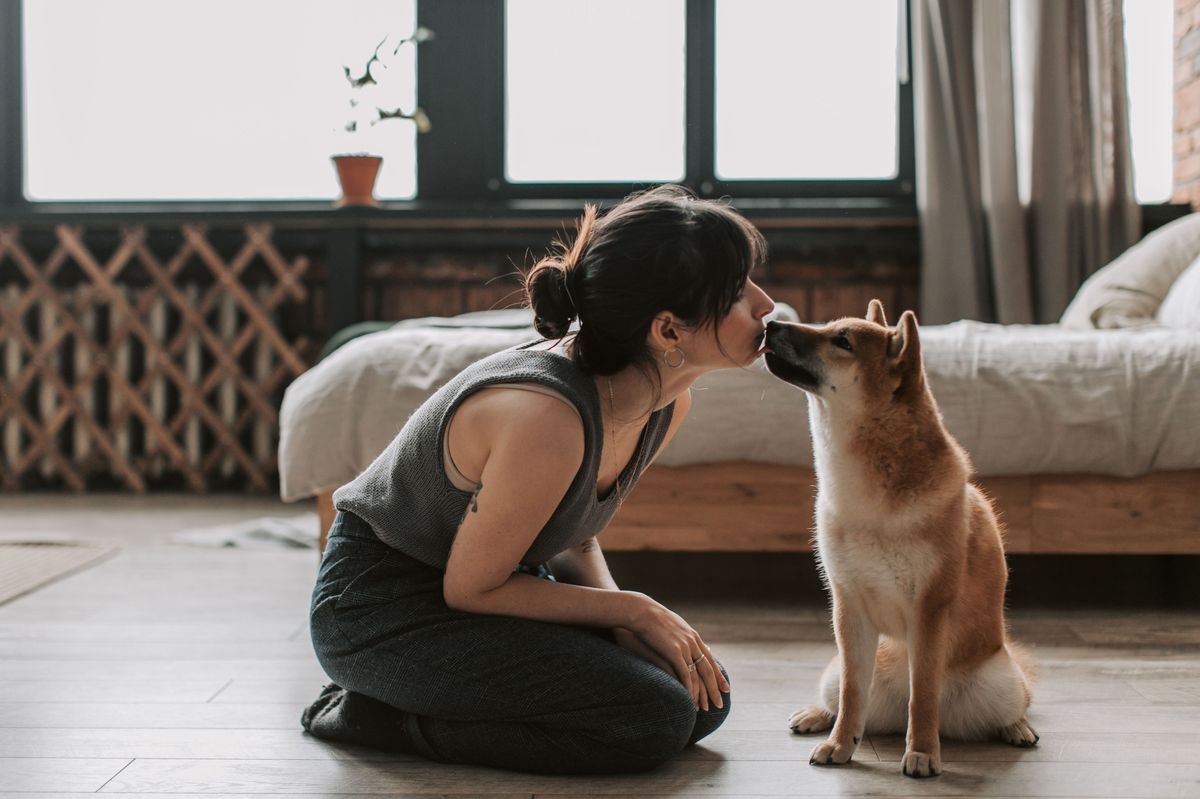
If you have ever planted a kiss on your dog’s forehead, you have probably wondered what goes through their mind. Do they understand it as a sign of love? Or are they simply tolerating it? The truth is that dogs do not interpret kisses the way humans do. They do not start life knowing what a kiss means. Instead, they learn to associate the gesture with your tone of voice, your body language, and the overall context of your interaction.
Over time, many dogs come to see kisses as a positive, bonding experience because they happen alongside petting, treats, or gentle praise. But not every dog feels the same way. Some may find kisses confusing or even threatening. Understanding your dog’s perspective can help you show affection in ways that truly make them happy.
Do Dogs Understand Kisses?
Dogs do not have an innate understanding of what a kiss represents. In the human world, kissing is a universal expression of love, friendship, or greeting. But dogs communicate primarily through body language, scent, and vocalizations. A kiss is a foreign behavior to them.
However, dogs are excellent at reading our emotions and intentions. They pick up on the gentle approach, the soft tone of voice, and the relaxed posture that often accompany a kiss. Through repetition, your dog can learn that this human action is usually associated with good things. So while they may not think ‘I am loved’ in human terms, they can feel safe and comforted by the ritual.
How Dogs Perceive Your Kisses
Dogs experience kisses through their senses and past experiences. Here is a closer look at what a kiss might feel like from a dog’s point of view.
Body Language and Tone of Voice
When you lean in to kiss your dog, they are watching your face closely. A slow, calm approach is more likely to be seen as friendly. If your voice is warm and you are smiling, your dog reads that as positive. But if you loom over them suddenly or use a harsh tone, the kiss may feel intimidating. Dogs are masters at reading facial expressions, so your mood matters more than the kiss itself.
Scent and Taste
Dogs experience the world through their noses. When you kiss them, they get an up-close whiff of your breath, your skin, and any scents you carry from your day. To a dog, this is a rich source of information. Some dogs enjoy the familiar smell of their owner; others may be put off by strong food odors or perfumes. The tactile sensation of your lips may also feel different from a usual pat or scratch.
Past Experiences and Conditioning
A dog’s past strongly shapes their reaction to kisses. A rescue dog who was never kissed may find it strange at first. On the other hand, a puppy who was gently kissed and praised from day one will likely grow up expecting kisses as part of affection. Dogs form positive associations through repetition and rewards. If kisses are often followed by treats or play, your dog will begin to anticipate those good things whenever you lean in.
Signs Your Dog Enjoys or Dislikes Kisses
Your dog’s body language is the best indicator of their feelings. Learn to read the signals so you can respect their comfort zone.
Positive Signs
If your dog enjoys your kisses, they may lean into you, wag their tail loosely, or give you a gentle lick in return. They might relax their ears, soften their eyes, and even offer a ‘doggy smile’ with a slightly open mouth. Some dogs will push their head into your hand, inviting more affection. A relaxed, wiggly body is a clear green light.
Warning Signs
Signs of discomfort include turning the head away, licking lips, yawning, tensing up, or whale eye (showing the whites of the eyes). If your dog growls, pulls back, or freezes, stop immediately. These are clear signals that the kiss is unwanted. Forcing affection can damage trust and lead to defensive behavior. Always respect your dog’s ‘no’.
Factors That Influence Your Dog’s Reaction
Not all dogs react the same way to kisses. Several factors play a role in how your dog perceives this gesture.
Breed and Personality
Some breeds tend to be more independent or less physically demonstrative, such as many sight hounds or certain terriers. Others, like Golden Retrievers or Labrador Retrievers, are often more people-oriented and may accept kisses readily. Individual personality matters too. A shy dog may need more time to feel comfortable with close face contact, while a confident, social dog may be more open.
Early Socialization
Dogs that were well-socialized as puppies are typically more adaptable to human gestures. Early exposure to gentle handling, including face touches and kisses, helps them learn that these actions are safe. Dogs with limited positive handling during their critical development period may be more wary.
Your Relationship
A dog’s trust in you directly affects how they interpret your kisses. A strong bond based on consistent, kind interactions makes it more likely your dog will accept kisses as part of your shared affection. If your relationship has been built on force or fear, even gentle kisses may feel threatening.
How to Kiss Your Dog in a Way They Understand
If you want to kiss your dog, do it in a way that communicates safety and love. Start by reading your dog’s mood. Approach slowly from the side rather than looming over their head. Pair the kiss with a soft, happy voice and maybe a treat afterward. Keep the kiss brief and on the top of the head or cheek, not directly on the mouth or nose. Always give your dog the choice to move away. If they seem uneasy, choose a different form of affection like a gentle scratch behind the ears or a belly rub.
Remember, what matters most is that your dog feels respected and comfortable. Kissing is just one way to show love, but it is not the only way. By paying attention to your dog’s cues, you can build a deeper bond and find the affection styles that work best for both of you.