
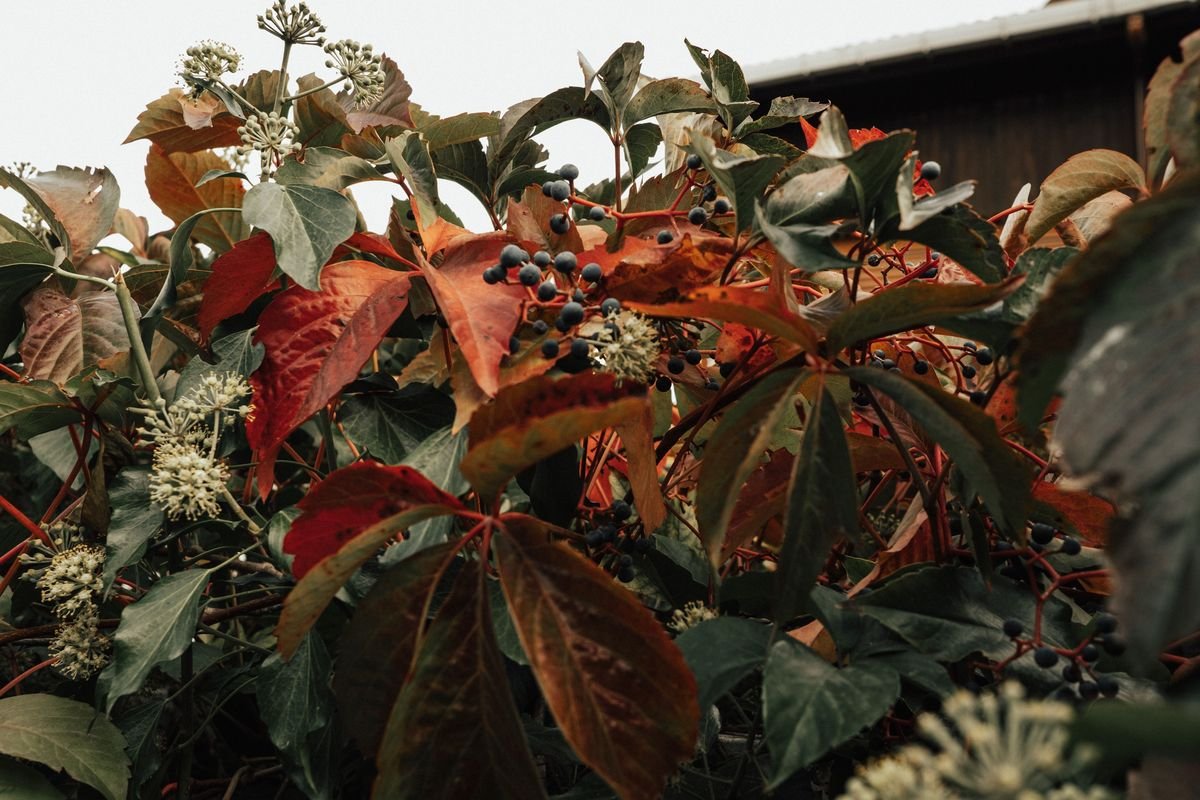
If you have a dog and Virginia creeper growing in your yard, you may be wondering whether this climbing vine poses a danger. The short answer is yes, Virginia creeper is poisonous to dogs, but the severity is generally mild to moderate. It contains calcium oxalate crystals that can cause irritation and discomfort when ingested. However, it is not as toxic as some other common plants like poison ivy or oleander. This article explains the risks, symptoms, and steps you should take if your dog eats Virginia creeper.
What Is Virginia Creeper?
Virginia creeper (Parthenocissus quinquefolia) is a perennial woody vine native to eastern and central North America. It is often grown as an ornamental for its attractive five-leaflet foliage and blue-black berries. The plant climbs by tendrils and can cover fences, walls, and trees. It is sometimes confused with poison ivy, which has three leaflets. Knowing how to identify Virginia creeper is important because while poison ivy causes severe skin irritation in people, Virginia creeper’s primary danger is to pets who ingest it.
Toxicity of Virginia Creeper to Dogs
Virginia creeper contains calcium oxalate crystals, which are needle-like structures that can cause mechanical irritation when chewed or swallowed. These crystals are present in all parts of the plant, including the leaves, stems, and berries. The berries are especially dangerous because they contain a higher concentration of oxalates and can be tempting for dogs due to their small size and appearance. In addition to oxalates, some sources suggest the berries may contain a toxic glycoside, though oxalates are the primary concern. The toxicity is considered mild to moderate. Most dogs experience only gastrointestinal upset and oral irritation. Severe poisoning is rare but possible if large quantities are ingested, especially the berries.
Symptoms of Virginia Creeper Poisoning in Dogs
Symptoms usually appear within minutes to a few hours after ingestion. Common signs include drooling or excessive salivation, pawing at the mouth, vomiting, diarrhea, loss of appetite, lethargy, and swelling of the lips, tongue, or throat. The oral irritation is due to the sharp oxalate crystals piercing the mucous membranes. In some cases, dogs may have difficulty swallowing or exhibit signs of abdominal pain. If a large number of berries are eaten, more serious effects like tremors, weakness, or changes in heart rate could occur, but these are uncommon.
What to Do If Your Dog Eats Virginia Creeper
If you catch your dog eating Virginia creeper, remove any remaining plant material from their mouth and rinse their mouth with water to flush out crystals. Offer a small amount of milk or yogurt, as dairy can help bind oxalates and soothe irritation. However, do not induce vomiting unless instructed by a veterinarian, as the sharp crystals could cause more damage on the way back up. Monitor your dog closely for symptoms. If they show persistent vomiting, severe swelling, difficulty breathing, or lethargy, contact your veterinarian or a pet poison helpline immediately. For mild cases, symptoms often resolve within 12 to 24 hours with supportive care.
Comparing Virginia Creeper to Poison Ivy and Other Plants
Many people confuse Virginia creeper with poison ivy because both are climbing vines. However, poison ivy has three leaflets (leaves of three, let it be) while Virginia creeper has five. Another key difference is that poison ivy causes an allergic skin rash in most people, but Virginia creeper does not cause skin irritation in humans unless you are sensitive. For dogs, poison ivy is less of a threat because their fur protects their skin; ingestion of poison ivy can cause gastrointestinal upset, but it is not as acutely toxic as Virginia creeper’s oxalates. Other plants with similar oxalate toxicity include philodendron, dieffenbachia, and peace lily. Unlike those houseplants, Virginia creeper is an outdoor vine.
Preventing Access to Virginia Creeper
The best way to protect your dog is to remove or fence off Virginia creeper. If you choose to keep the plant for its ornamental value, train your dog to avoid it using positive reinforcement and supervision. Regularly trim the vine to keep berries out of reach. You can also apply a taste deterrent spray to the leaves. If you have a dog that likes to chew on plants, consider replacing Virginia creeper with a dog-safe alternative like climbing hydrangea or jasmine. Always check with your veterinarian or a local extension service to identify plants in your yard and their toxicity.