
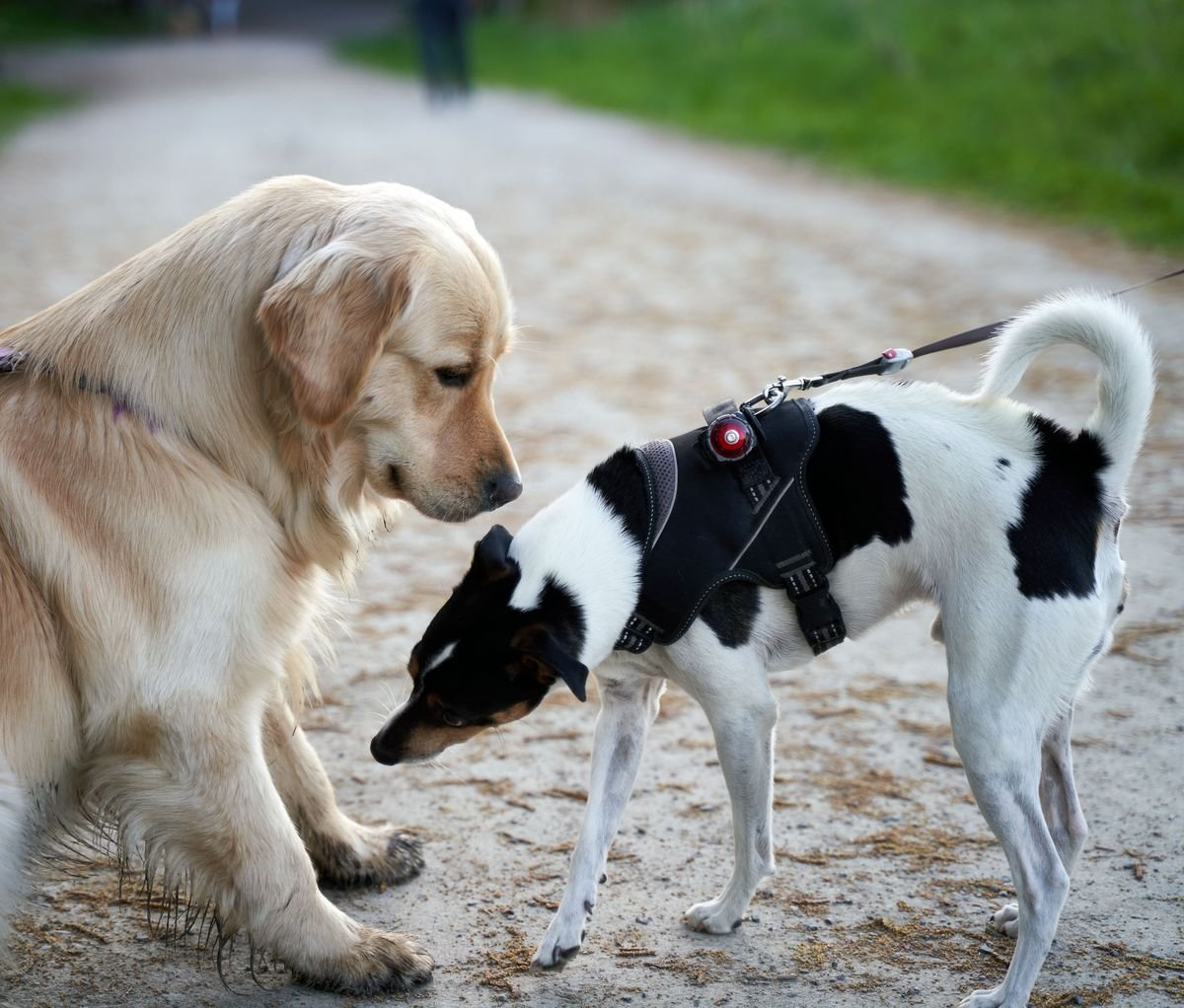
If your dog barks frantically every time they see another dog, you are not alone. This behavior is one of the most common complaints among dog owners. The good news is that with patience and the right approach, you can teach your dog to remain calm around other dogs.
Understanding the root cause of the barking is the first step. Dogs bark at other dogs for a variety of reasons, including fear, excitement, frustration, or even a desire to greet. The solution depends on identifying the underlying motivation.
Understanding Why Dogs Bark at Other Dogs
Before you can stop the barking, you need to understand why your dog is doing it. Each dog is an individual, but most barking at other dogs falls into one of a few categories.
Common Triggers and Motivations
Some dogs bark because they are fearful. They see another dog as a threat and try to make it go away with noise. Others bark out of excitement: they want to play or greet but cannot get to the other dog, causing frustration. A third group barks due to territorial instincts, especially when on home turf. Finally, some dogs bark because they have learned that barking makes the other dog go away, reinforcing the behavior.
The Role of Past Experiences
A dog’s history heavily influences their reaction. If a dog was attacked or poorly socialized as a puppy, they are more likely to react with fear and barking. Similarly, a dog that was allowed to practice barking over many years will have a deeply ingrained habit. Recognizing that past experiences shape current behavior helps you approach training with empathy.
Training Techniques to Reduce Barking
Once you have a good idea of why your dog barks, you can choose a training method that targets that specific cause. Consistency is key, and short daily sessions work better than long, occasional ones.
The ‘Look at That’ Method
This technique uses the natural tendency of dogs to respond to a trigger and then look at you for a reward. Start at a distance where your dog notices another dog but does not bark. Say ‘look at that’ and then treat your dog the instant they glance your way. Gradually decrease the distance over many sessions. Your dog learns that seeing another dog predicts a treat, not a need to bark.
Behavioral Reinforcement and Redirection
Instead of punishing barking, reward calm behavior. When you are out and your dog notices another dog but does not bark, give high-value treats and quiet praise. If they start to bark, turn and walk calmly in the opposite direction to create space. Then, when they are quiet, reward them. This teaches them that quiet leads to good things while barking leads to lost opportunities.
The ‘Quiet’ Command
Teach your dog a default quiet behavior. First, wait for a moment of quiet (even when not around other dogs) and say ‘quiet’ and treat. Then practice in gradually more distracting situations. For example, have a helper walk a calm dog at a distance. Ask for ‘quiet’ when your dog notices but before they bark. Reward generously. With time, the word ‘quiet’ will cue your dog to settle.
Desensitization and Counterconditioning
This powerful combination changes your dog’s emotional response to seeing other dogs. Instead of feeling scared or excited, they learn to feel neutral or happy.
Gradual Exposure Exercises
Desensitization means exposing your dog to other dogs at a level that does not trigger barking. For instance, if your dog reacts at 50 feet, start at 100 feet. Spend time just letting your dog watch other dogs from that safe distance while you feed treats. Over days or weeks, move a little closer, always staying below the barking threshold. If your dog barks, you have moved too fast. Back up and try again.
Creating Positive Associations
Counterconditioning pairs the sight of another dog with something wonderful. As soon as your dog sees another dog (even from a distance), start feeding a stream of tiny, high-value treats. Stop treating when the other dog leaves. Your dog will start to associate other dogs with good things, reducing the urge to bark. This is often combined with desensitization for the best results.
Management Tools and Environmental Adjustments
While training takes time, you can use management to set your dog up for success and prevent them from practicing the unwanted barking behavior.
Using Visual Barriers
If your dog barks at dogs outside your window or fence, block the view temporarily. You can use privacy film, temporary fencing, or even a solid curtain. This prevents the trigger and allows you to work on training without setbacks. For walks, consider walking during quieter times or in less populated areas until training progresses.
White Noise and Distractions
Playing white noise, classical music, or a fan can mask the sounds of dogs outside. Also, carry a squeaky toy or a special treat that only appears during walks. When a dog approaches, use the toy or a high-value treat to redirect your dog’s attention before they bark. This buys you time to move away or change direction.
When to Seek Professional Help
Some cases of barking are deeply rooted or involve aggression. If you have tried consistent training for several weeks with little improvement, or if your dog growls, lunges, or shows any sign of aggression alongside barking, consult a professional.
Signs You Need a Trainer or Behaviorist
Look for these signs: the barking happens in every situation, not just specific ones; your dog cannot be calmed even with high-value treats; you feel unsafe or overwhelmed; or the barking is accompanied by snapping or biting. A certified dog trainer or veterinary behaviorist can create a tailored plan and rule out underlying medical issues. Do not hesitate to seek help, as early intervention often prevents the problem from worsening.