
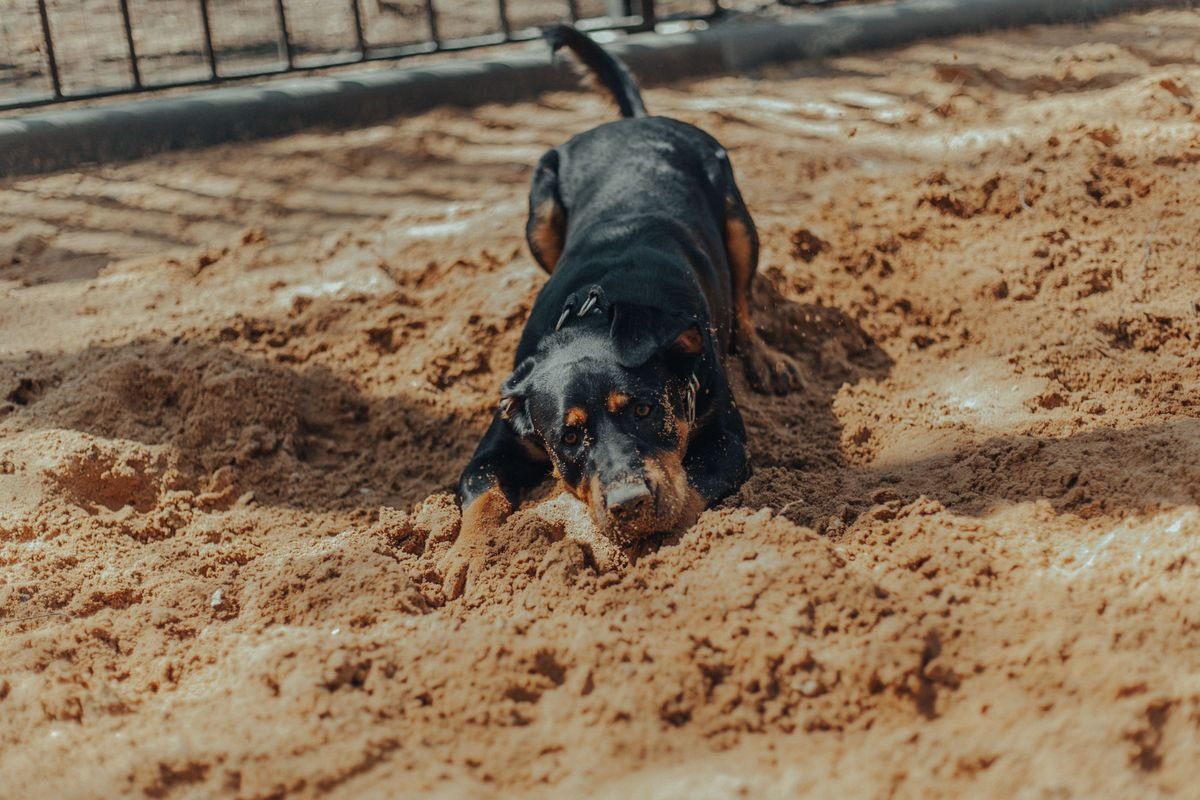
If your dog has turned your backyard into an escape artist’s playground, you are not alone. Digging under fences is a common problem that can lead to safety risks, damaged landscaping, and frustrated owners. The good news is that with the right approach, you can stop this behavior and keep your dog secure.
This guide covers why dogs dig under fences and how to address it. You will learn about reinforcement techniques, deterrents, training, and environmental changes that work. Whether your dog is digging out of boredom, prey drive, or anxiety, there is a solution that fits your situation.
Why Do Dogs Dig Under Fences?
Understanding the root cause of your dog’s digging is the first step to stopping it. Dogs dig for many reasons, and each cause requires a different solution. Without knowing the ‘why,’ you may waste time on methods that don’t work.
Boredom or Lack of Exercise
Dogs with pent-up energy often dig to entertain themselves. If your dog is left alone for long hours or doesn’t get enough physical activity, digging becomes a way to burn off steam. High-energy breeds like terriers, huskies, and herding dogs are especially prone to this.
Prey Drive
If your dog sees or smells small animals like squirrels, rabbits, or moles on the other side of the fence, instinct can kick in. Digging under the fence is an attempt to chase the prey. This is common in breeds with strong hunting instincts.
Separation Anxiety
Some dogs dig when they are left alone because they are trying to reunite with you. Separation anxiety can cause frantic scratching and digging near the fence line, especially if you have just left the house.
Escape to Explore
Curious dogs may simply want to see what is on the other side. If your yard is fenced but the dog can see or hear interesting things beyond, they may dig to get there. This is often reinforced if they successfully escape and have a good time.
Comfort or Temperature Regulation
On hot days, dogs may dig to find cool soil to lie in. In cold weather, they might dig to create a sheltered spot. If your dog digs only in certain weather conditions, this could be the cause.
Effective Ways to Stop Digging Under a Fence
Once you know why your dog is digging, you can choose the best solution. Here are proven methods that address the problem from multiple angles.
Reinforce the Base of the Fence
Physical barriers are often the simplest fix. Bury the bottom of the fence at least 12 inches deep using wire mesh or concrete. Alternatively, lay heavy stones, pavers, or large rocks along the fence line. Another option is to attach a metal or plastic barrier that extends outward along the ground, such as an L-shaped footer made of welded wire. This prevents the dog from finding a weak spot to dig.
Install a Digging Deterrent
Deterrents discourage digging without harming your dog. One effective method is to place chicken wire or plastic garden fencing flat on the ground just inside the fence. Dogs dislike the feel of wire on their paws. You can also use scent deterrents like citrus peels or commercial repellents. Motion-activated sprinklers can startle the dog when they approach the fence line, creating a negative association.
Provide Mental and Physical Stimulation
A tired dog is less likely to dig out of boredom. Increase your dog’s daily exercise with walks, runs, or play sessions. Add mental enrichment such as puzzle toys, treat-dispensing games, nose work, or training sessions. Rotate toys to keep things interesting. If your dog is a digger by nature, consider setting up a designated digging pit filled with sand or loose soil where they are allowed to dig freely.
Use Training and Positive Reinforcement
Train your dog to stay away from the fence line. Teach a reliable ‘leave it’ or ‘come’ command. Practice near the fence while on a leash, rewarding your dog for ignoring the fence. If you catch your dog digging, interrupt with a firm ‘no’ and redirect to a legal digging spot or another activity. Never punish after the fact; your dog won’t understand and it may increase anxiety.
Address Separation Anxiety
If anxiety is the cause, physical barriers alone won’t help. Work on desensitization and counter-conditioning. Provide a safe space with familiar comfort items when you leave. Leave the dog with a long-lasting treat like a stuffed Kong. In severe cases, consult a veterinarian or a certified behaviorist who may recommend medication or a structured behavior modification plan.
Common Mistakes to Avoid
Some attempts to stop digging can make things worse. Knowing what not to do is just as important as knowing the right steps.
Punishment After the Fact
Scolding or punishing your dog after they have already dug a hole is ineffective. Dogs don’t connect the punishment with the action unless caught in the act. Punishment can cause fear and anxiety, which may lead to more digging.
Short-Term Fixes
Simply filling in a hole without addressing the cause or reinforcing the fence is a temporary fix. Your dog will dig again. Always pair a physical solution with behavioral management.
Ignoring the Underlying Cause
Even if you install a perfect physical barrier, the underlying motivation (boredom, anxiety, prey drive) may still exist. Your dog might shift to other destructive behaviors like chewing or barking. Always address the root of the problem.
When to Consider Professional Help
If you have tried multiple methods and your dog continues to dig under the fence, it may be time to seek expert advice. A certified professional dog trainer or a veterinary behaviorist can assess your dog’s specific triggers and create a customized plan. This is especially important if the digging is driven by severe anxiety or if your dog regularly escapes and puts itself in danger.