
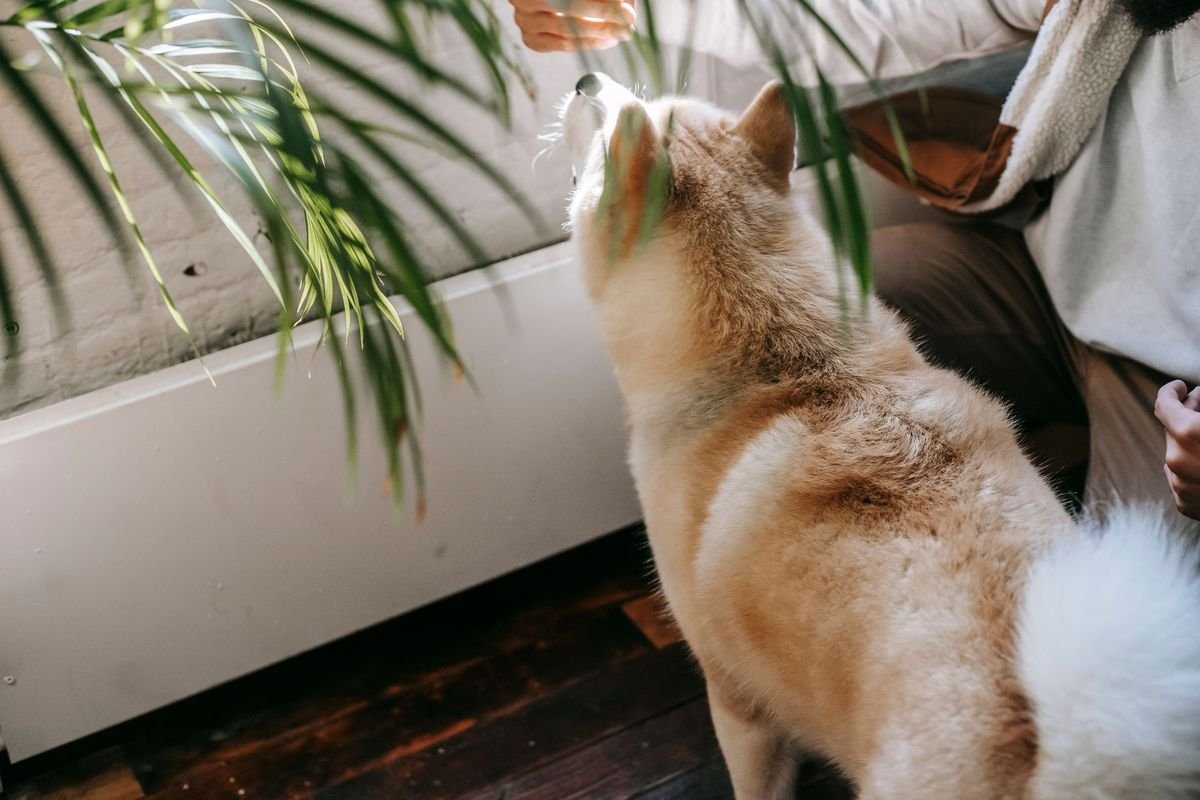
If you are a dog owner and a plant lover, you have likely asked yourself: ‘Are majesty palm plants poisonous to dogs?’ This common houseplant, with its graceful fronds and tropical appearance, is a popular choice for brightening indoor spaces. The good news is that the majesty palm (Ravenea rivularis) is not toxic to dogs according to the ASPCA. However, that does not mean it is completely risk-free. In this article, we will explore the safety of majesty palms around dogs, clear up common confusion with toxic look-alikes, and provide guidance on what to do if your dog decides to take a nibble.
What Is a Majesty Palm?
The majesty palm, scientifically known as Ravenea rivularis, is a tropical palm native to Madagascar. It is often grown as an indoor houseplant in temperate climates, thanks to its ability to thrive in bright, indirect light and its tolerance for lower humidity. Its long, feathery fronds arch gracefully, making it a visually appealing addition to many homes. This palm can grow quite large, reaching up to 10 feet indoors under ideal conditions.
Outside, majesty palms are sometimes used in subtropical landscapes. They are relatively low-maintenance plants that prefer moist but well-drained soil. Their popularity stems from their lush, exotic look and their reputation for being easy to care for. But for pet owners, the primary concern is whether this plant poses any danger to curious dogs.
Are Majesty Palms Safe for Dogs?
Yes, majesty palms are considered non-toxic to dogs. The American Society for the Prevention of Cruelty to Animals (ASPCA) does not include majesty palm on its list of toxic plants for dogs or cats. This means that if your dog chews on a frond or ingests a small amount of the plant, it is unlikely to cause serious poisoning or organ damage.
However, non-toxic does not mean completely harmless. Any plant material can cause mild gastrointestinal upset in some dogs, especially if consumed in large quantities. Symptoms like vomiting, diarrhea, or drooling can occur simply because the dog’s digestive system is not used to processing large amounts of fibrous plant matter. Additionally, the sharp edges of palm fronds could potentially cause minor physical irritation to the mouth or throat if the dog chews aggressively.
Why the Confusion? Comparing Majesty Palm to Toxic Palms
Many dog owners mistakenly believe that all palms are dangerous because of a common toxic look-alike: the sago palm. Sago palms (Cycas revoluta) are not true palms but cycads, and they are extremely toxic to dogs. Every part of the sago palm, especially the seeds (nuts), contains cycasin, a toxin that can cause severe liver failure, seizures, and even death in dogs. This stark difference is why it is critical to know exactly which palm species you have.
Another palm sometimes confused with the majesty palm is the parlor palm (Chamaedorea elegans), which is also non-toxic. However, confusion with sago palm is the primary source of concern. If you own a sago palm, you should remove it from areas accessible to your dog immediately. Always look up your specific plant by its scientific name to confirm its safety.
What to Do If Your Dog Eats Part of a Majesty Palm
Even though majesty palms are not toxic, it is still wise to monitor your dog after any plant ingestion. If you catch your dog chewing on a majesty palm, remove the plant and discourage the behavior. Then observe your dog for the next few hours.
Common signs of mild gastrointestinal upset from eating non-toxic plants include:
– Vomiting
– Diarrhea
– Drooling or hypersalivation
– Loss of appetite (temporary)
– Lethargy
If your dog exhibits any of these symptoms, it is usually not an emergency. Offer fresh water and withhold food for a few hours to let the stomach settle. If the symptoms persist for more than 24 hours, or if your dog seems excessively ill, contact your veterinarian. Also call your vet if you are unsure how much your dog ate or if your dog is very small, very young, or has a pre-existing health condition.
Preventing Problems: Best Practices for Pet Owners
To avoid any issues, it is best to place your majesty palm in a location that is out of reach of your dog. For example, use a tall plant stand or a hanging planter. The fronds may still be accessible if your dog is large, so consider a room that your dog does not have free access to when you are not supervising.
Training is also helpful. Teach your dog a ‘leave it’ command to prevent them from investigating plants. Provide plenty of appropriate chew toys to redirect their chewing instinct. If your dog is a determined plant chewer, you might also try a bitter deterrent spray on the leaves.
Remember that even non-toxic plants can cause a choking hazard if large pieces are swallowed. Always monitor your dog around any new houseplant.
Conclusion: Majesty Palms Are a Safe Choice for Dog Owners
In summary, majesty palm plants are not poisonous to dogs. They offer a safe, beautiful way to bring some tropical greenery into a home with canine companions. The key concern is distinguishing them from toxic sago palms and understanding that ‘non-toxic’ does not mean ‘no reaction.’ Mild digestive upset is possible, but serious poisoning is not. With sensible precautions, you can enjoy a majestic palm without worrying about your dog’s health.
If you have any doubts about your specific plant or your dog’s health, always consult your veterinarian. They can provide personalized advice based on your dog’s size, age, and health history.