
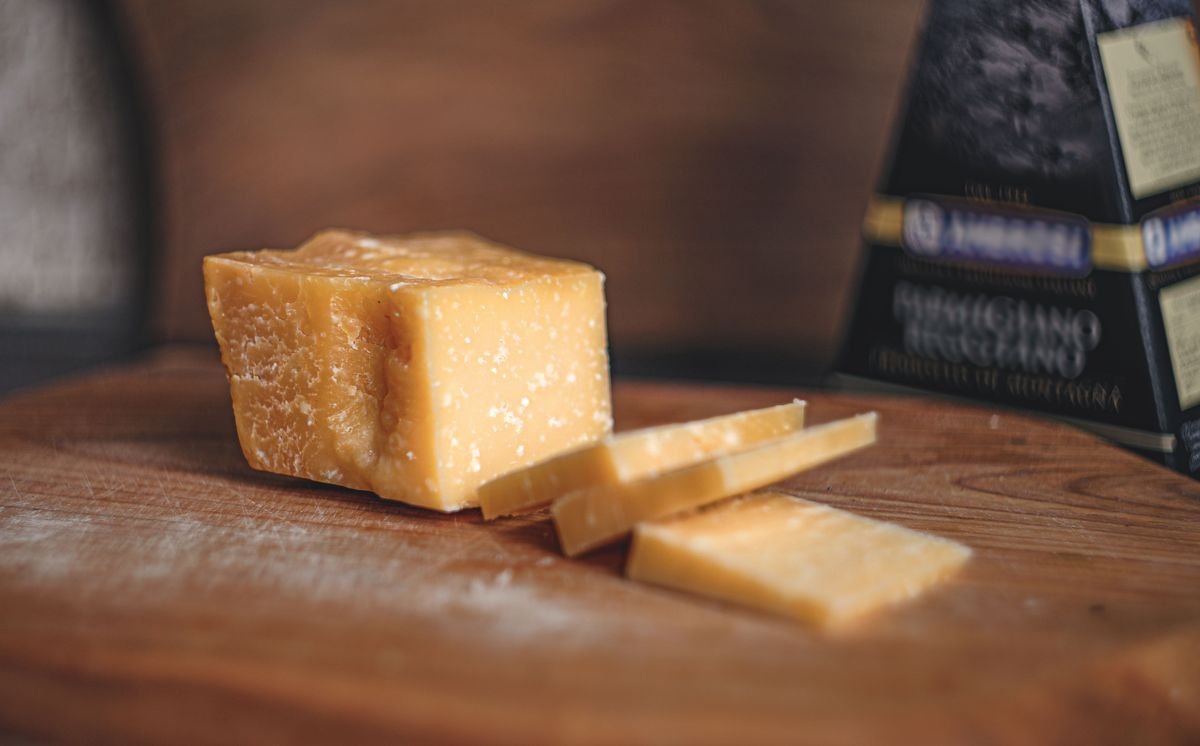
If you enjoy grating fresh Parmesan over your pasta, you might wonder whether a small sprinkle is safe for your dog. The short answer is that plain Parmesan cheese is not toxic to dogs, but it is far from an ideal treat. Most dogs can tolerate a tiny amount without immediate harm, but the high salt and fat content make it a risky choice for regular feeding.
Parmesan is a hard, aged cheese with very low lactose, which reduces the chance of digestive upset. However, its sodium and fat levels are significantly higher than what dogs need. Before you share your cheese board, it’s important to understand the potential consequences and know how much (if any) is considered safe.
Understanding Parmesan Cheese
Parmesan cheese, or Parmigiano-Reggiano, is a hard, granular cheese aged for at least 12 months. The aging process breaks down most of the lactose, leaving only trace amounts. This is why many lactose-intolerant humans can enjoy Parmesan without issues. For dogs, the low lactose content means that lactose intolerance is less of a concern than with softer cheeses.
Nutritionally, one tablespoon (5 grams) of grated Parmesan contains about 22 calories, 1.5 grams of fat, and 76 milligrams of sodium. While that might seem insignificant to us, a 10-pound dog’s daily sodium requirement is only about 100 milligrams. Just one tablespoon provides over 75% of that limit. The fat content can also add up quickly, especially for small breeds.
Can Dogs Eat Parmesan Cheese?
Technically yes, dogs can eat small amounts of plain Parmesan cheese without immediate toxicity. Many dogs enjoy the strong, savory flavor. However, ‘can eat’ does not mean ‘should eat.’ The high sodium and fat make Parmesan a poor choice for regular treats. Dogs with certain health conditions, such as kidney disease, heart problems, or pancreatitis, should avoid it entirely.
Parmesan is often used as a topping for dishes that may contain other harmful ingredients, like garlic or onion powder. Always check that the Parmesan is plain and free of added seasonings before offering any to your dog.
Risks of Feeding Parmesan Cheese to Dogs
The main risks come from high sodium and high fat content. Excessive salt intake can lead to sodium ion poisoning in dogs, with symptoms like vomiting, diarrhea, lethargy, and excessive thirst or urination. In severe cases, it can cause tremors, seizures, or even coma.
High-fat foods can trigger pancreatitis, a painful inflammation of the pancreas. Dogs prone to pancreatitis, such as Miniature Schnauzers, should never eat Parmesan. Even in healthy dogs, too much fat can cause digestive upset, including loose stools or vomiting.
Another concern is that Parmesan is a calorie-dense food. Regular feeding can contribute to obesity, which leads to other health problems like joint issues and diabetes. Additionally, some dogs are sensitive to the tyramine in aged cheeses, which can cause headaches or behavioral changes.
How Much Parmesan Cheese Is Safe for Dogs?
If you decide to give your dog Parmesan, it should only be an occasional treat in very small amounts. A safe serving size depends on your dog’s weight. For a small dog (under 20 pounds), a pinch no larger than a pea is plenty. For medium to large dogs (20 to 80 pounds), up to half a teaspoon once in a while may be acceptable. For giant breeds, one teaspoon is still a high-sodium treat.
It’s best to offer it only as a training reward or a rare snack, not as a daily addition to their food. Monitor your dog for any signs of gastrointestinal upset after eating Parmesan. If you notice vomiting, diarrhea, or lethargy, stop giving it and consult your veterinarian. Always remember that treats should make up no more than 10% of your dog’s daily calorie intake.
Healthier Alternatives to Parmesan Cheese for Dogs
Instead of Parmesan, consider low-sodium, low-fat options that still provide a satisfying crunch or flavor. Plain, air-popped popcorn (without butter or salt) is a fun, low-calorie treat. Baby carrots, cucumber slices, or green beans offer vitamins and fiber with minimal risk. Small pieces of cooked, unseasoned chicken or turkey are high in protein and low in fat.
For dogs that love cheese, a tiny piece of low-fat mozzarella or cottage cheese (both lower in sodium and fat) can be a safer occasional treat. There are also commercial dog treats formulated to mimic cheese flavor without the unhealthy additives. Always introduce any new food gradually and in small amounts to see how your dog reacts.