
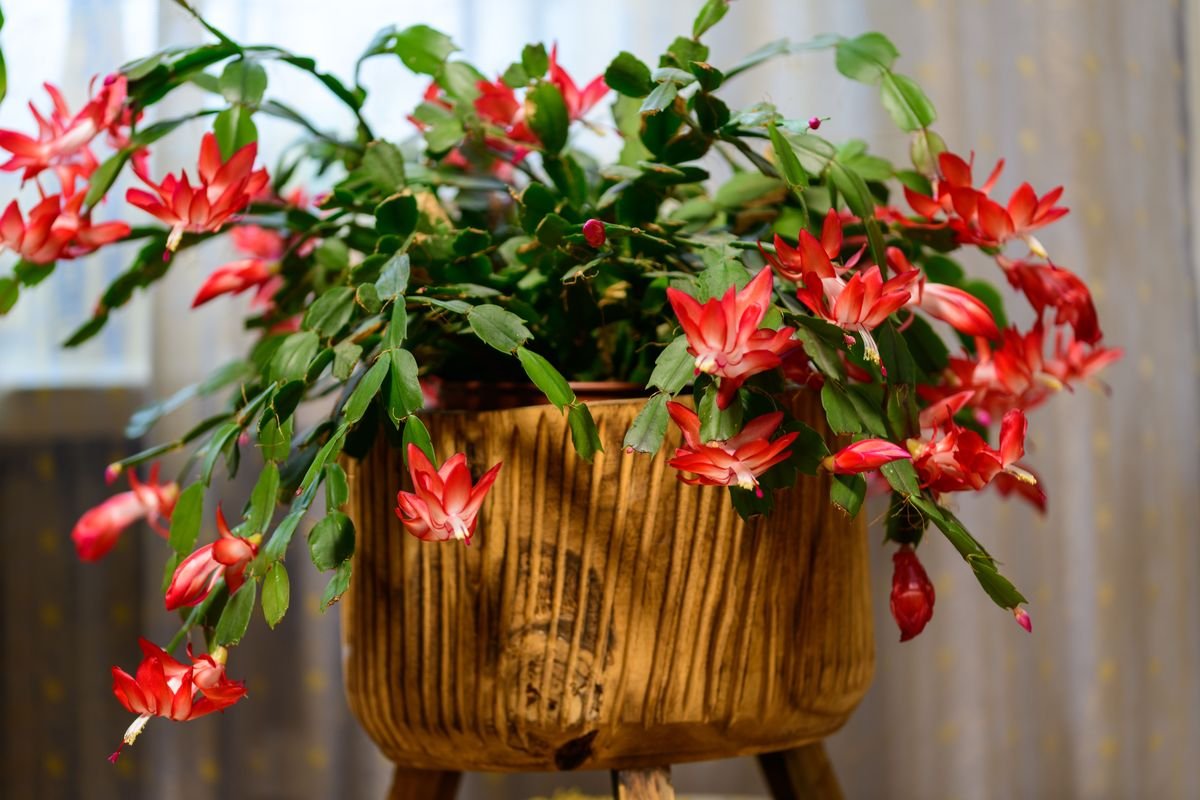
The Christmas cactus (Schlumbergera bridgesii) is a popular holiday plant known for its vibrant blooms. But if you share your home with a curious dog, you may wonder: is Christmas cactus toxic to dogs? The good news is that this plant is generally considered non-toxic to dogs. However, the term “non-toxic” can be misleading. While it won’t cause severe poisoning, ingestion can still lead to mild gastrointestinal upset. It’s important to understand the real risks and know what to watch for.
Many pet owners assume that any plant safe for humans is safe for dogs. That is not always the case. Christmas cactus is not a true cactus. It is a succulent native to Brazilian rainforests. Its milky sap contains compounds that can irritate a dog’s digestive system. So while it is not deadly, it is not completely harmless either.
Understanding Christmas Cactus Toxicity
Christmas cactus is often listed as non-toxic by the ASPCA. This classification means the plant does not contain substances that cause serious organ damage or death. But non-toxic does not mean risk-free. The plant’s tissues can cause mild digestive upset if eaten in large amounts. The sap may also cause skin irritation in sensitive dogs.
It is worth noting that other holiday plants like poinsettias, holly, and mistletoe are much more dangerous. Poinsettias can cause vomiting and drooling. Holly berries are toxic and can cause gastrointestinal and nervous system issues. Mistletoe can cause cardiovascular collapse. Compared to these, Christmas cactus is relatively safe.
The Science Behind the Plant’s Chemistry
Christmas cactus produces saponins and other compounds that act as natural defenses against pests. These compounds are not highly toxic to mammals. However, they can irritate the mucous membranes of the mouth, esophagus, and stomach. When a dog chews on the plant, the sap releases these irritants. The result is usually mild inflammation and increased salivation.
Some dogs may be more sensitive than others. A small nibble might cause no symptoms at all. A larger amount can lead to vomiting or diarrhea. The plant does not contain oxalates or cardiac glycosides, which are common in truly toxic plants. So the risk is low.
How Dogs React to Christmas Cactus
Dogs are often attracted to the texture and smell of plants. A Christmas cactus might look like a fun chew toy. If your dog ingests a piece, the first reaction is usually drooling or pawing at the mouth. This is due to the irritating sap. Some dogs may vomit once or twice. Diarrhea can occur but is less common. Most symptoms resolve within a few hours.
If your dog has a pre-existing condition such as gastrointestinal sensitivity, symptoms may be more pronounced. Puppies and small breeds are also more likely to experience noticeable upset because of their size. In most cases, no veterinary treatment is needed.
Symptoms of Christmas Cactus Ingestion in Dogs
If your dog eats a Christmas cactus, watch for these signs:
Excessive drooling is often the first symptom. The sap irritates the mouth, causing increased saliva production. You may also see your dog licking its lips frequently or rubbing its face on the floor.
Vomiting may occur within a few hours. It is usually mild and may contain plant material. Diarrhea is less common but possible. Other signs include loss of appetite or lethargy. In rare cases, if a large amount is eaten, there could be mild abdominal discomfort.
Symptoms typically appear within 30 minutes to 2 hours after ingestion. They usually resolve on their own within 24 hours. If symptoms persist longer than a day or become severe, consult your veterinarian.
What to Do If Your Dog Eats Christmas Cactus
Stay calm. Most cases do not require emergency treatment. Remove any remaining plant parts from your dog’s reach. Offer fresh water to help rinse the mouth. Do not induce vomiting or give any medications without consulting a vet.
Monitor your dog for the symptoms listed above. Keep a record of what time the ingestion occurred and how much was eaten. If your dog vomits once or twice but otherwise seems fine, you can wait and watch. If vomiting continues, if there is blood in the vomit or stool, or if your dog seems depressed, call your vet.
If your dog has a medical condition or is very young or old, a vet visit may be prudent. The vet may recommend a bland diet for a day or give medication to settle the stomach. In most cases, no treatment beyond supportive care is needed.
Safe Alternatives for Pet-Friendly Homes
If you are concerned about any risk, consider pet-safe holiday plants. Some options include:
Spider plants are non-toxic and easy to care for. Boston ferns also make safe choices. Areca palms and parlor palms add a tropical feel without danger.
You can also keep the Christmas cactus out of reach. Place it on a high shelf or in a hanging basket. Train your dog to avoid plants using positive reinforcement. Bitter apple spray can deter chewing.
Remember that even a safe plant can cause intestinal blockage if large pieces are swallowed. Supervise your dog around any plant. If you see chewing, redirect to a toy.
Frequently Asked Questions
Can Christmas cactus kill a dog? No, it is very unlikely. The plant is classified as non-toxic and does not contain lethal toxins. At most, it causes mild stomach upset.
What if my dog only ate a small piece? A small piece usually causes no symptoms or very mild drooling. Watch for any changes, but you generally do not need to worry.
Is the sap of Christmas cactus poisonous? The sap can be irritating but is not poisonous. It may cause contact dermatitis in some pets or people.
Should I make my dog vomit? No. Never induce vomiting unless instructed by a veterinarian. The plant is already mild, and vomiting can cause further irritation.
What other holiday plants are dangerous? Holly, mistletoe, amaryllis, and lilies are more toxic. Keep these completely away from pets.