
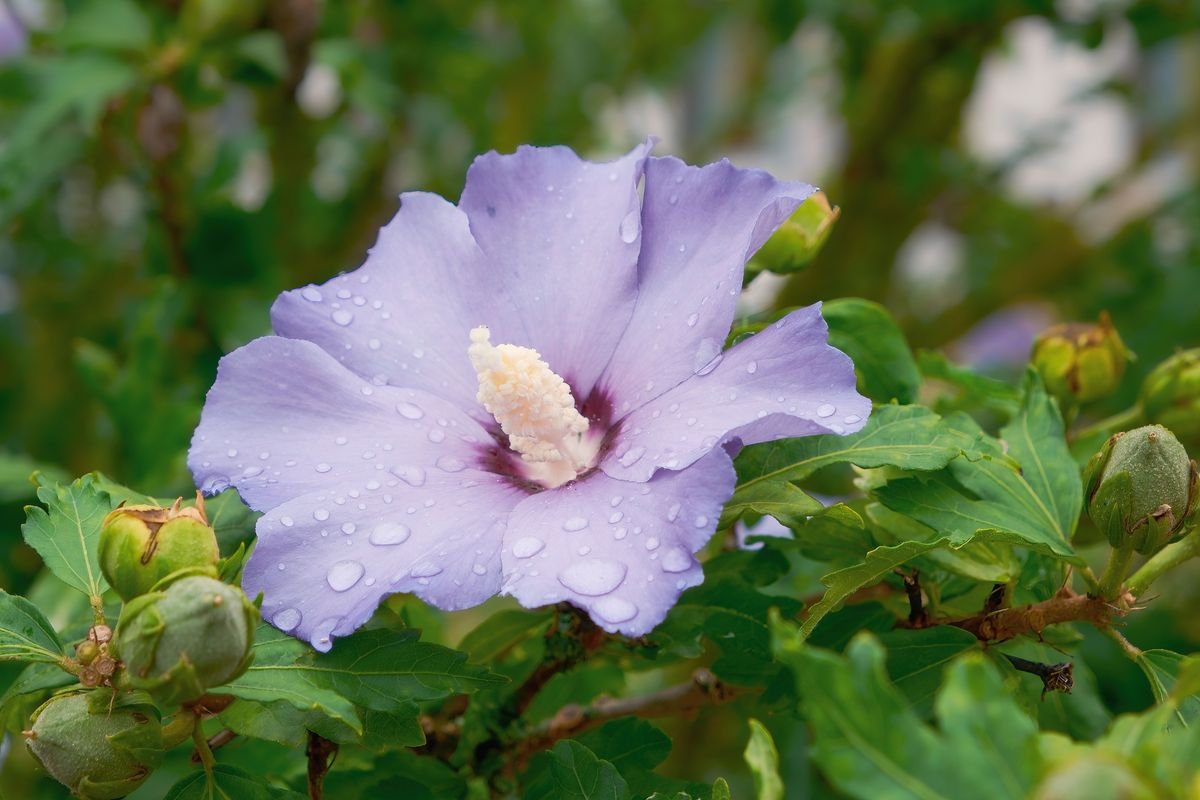
If you have a dog and a garden, you may be wondering about the safety of common ornamental plants. The Rose of Sharon (Hibiscus syriacus) is a popular flowering shrub, but is it toxic to dogs? The good news is that Rose of Sharon is generally considered mildly toxic to dogs. It is not typically life threatening, but it can cause gastrointestinal upset and other unpleasant symptoms if ingested.
This article will help you understand the risks, recognize symptoms of poisoning, and know what to do if your dog eats any part of this plant. We will also cover how to keep your dog safe while still enjoying a beautiful garden.
Understanding Rose of Sharon and Its Potential Risks
Rose of Sharon is a hardy shrub that produces large, showy flowers in shades of pink, purple, blue, and white. It is a member of the mallow family and is closely related to hibiscus. While the plant is not highly toxic, it does contain compounds that can be harmful to dogs if ingested in large quantities.
The main concern is the presence of saponins and other irritants that can cause digestive upset. The flowers, leaves, and stems all contain these compounds, though the bark and seeds may be more concentrated. Fortunately, the plant has a bitter taste, so many dogs will not eat large amounts.
What Is Rose of Sharon?
Rose of Sharon is a deciduous shrub native to East Asia but widely cultivated in North America. It grows 8 to 12 feet tall and blooms from summer to fall. The flowers are trumpet shaped and attract bees and butterflies. Because of its beauty and low maintenance, it is a common choice for hedges and garden borders.
However, dog owners should be cautious. While the plant is not classified as severely toxic, it is listed by the ASPCA as mildly toxic to dogs. The exact toxic principle is not well defined, but ingestion can cause mild symptoms.
Are All Parts of the Plant Toxic?
All parts of the Rose of Sharon plant contain potentially irritating compounds, but the severity varies. The flowers and leaves are less toxic than the bark and seeds. The seeds, in particular, can cause more pronounced gastrointestinal upset if eaten in quantity.
It is important to note that the plant’s toxicity is considered low. Most cases of ingestion result in mild symptoms that resolve without treatment. However, if your dog has a sensitive stomach or eats a lot of the plant, more significant issues can occur.
Symptoms of Rose of Sharon Poisoning in Dogs
If your dog eats Rose of Sharon, you may notice symptoms within a few hours. The most common signs are gastrointestinal: vomiting, diarrhea, drooling, and loss of appetite. Some dogs may also experience lethargy or mild abdominal discomfort.
In rare cases, if a very large amount is ingested, symptoms could include vomiting that lasts more than 24 hours, dehydration, or signs of weakness. The plant does not cause organ failure or severe neurological issues. It is not known to be fatal to dogs.
Watch for any of these signs, especially if you know your dog has been chewing on the shrub. Mild cases may only involve one or two episodes of vomiting, while more significant ingestions could lead to repeated vomiting and diarrhea.
What to Do If Your Dog Eats Rose of Sharon
First, do not panic. Because the toxicity is low, most dogs will recover without medical intervention. Remove any remaining plant material from your dog’s mouth and offer fresh water. Observe your dog closely for the next few hours.
If your dog vomits once or twice but seems otherwise normal, you can monitor at home. However, if vomiting persists, if you see blood in the vomit or stool, or if your dog becomes lethargic or dehydrated, contact your veterinarian.
You should also consider calling the ASPCA Animal Poison Control Center at (888) 426-4435 for advice. They can help determine if your dog needs to be seen.
At-Home Care vs. Veterinary Attention
For mild cases, you can offer a bland diet (boiled chicken and rice) for a day or two to settle the stomach. Make sure your dog has access to plenty of water. Avoid giving any medications without veterinary approval.
Seek veterinary attention if your dog is very young, very old, or has preexisting health conditions. Also, if your dog ingested a large amount (for example, an entire branch with leaves and flowers), it is better to be cautious. The vet may induce vomiting if the ingestion was recent, or administer medications to control vomiting and diarrhea.
In most cases, treatment is supportive: fluids, antiemetics, and monitoring. Hospitalization is rarely needed.
Preventing Access to Rose of Sharon in Your Yard
The best way to protect your dog is to prevent access to the plant. If you have Rose of Sharon in your garden, consider fencing off the area or using a barrier that your dog cannot cross. You can also train your dog to avoid the plant, but this is not always reliable.
Another option is to relocate the shrub to an area where your dog does not have access. If you are planning a new garden, you might choose a different plant that is completely non toxic. Always check with the ASPCA’s list of toxic and non toxic plants before adding new greenery to your yard.
Remember that fallen flowers and leaves can also be tempting, so clean up any debris regularly.
Safer Alternatives to Rose of Sharon for Dog-Friendly Gardens
If you love the look of Rose of Sharon but want a safer option, consider these dog friendly plants that offer similar beauty: roses (thorns can be a hazard, but the plants are not toxic), sunflowers, marigolds, and snapdragons are all non toxic to dogs. Hibiscus plants (true Hibiscus rosa sinensis) are also generally non toxic, though they can cause mild upset if eaten in large amounts.
Ornamental grasses, lavender, and rosemary are other safe choices that add texture and color. Always double check with a reliable source before planting, as some common garden plants can be dangerous.
Creating a dog safe garden is possible with a little planning. You do not have to sacrifice aesthetics for safety.