
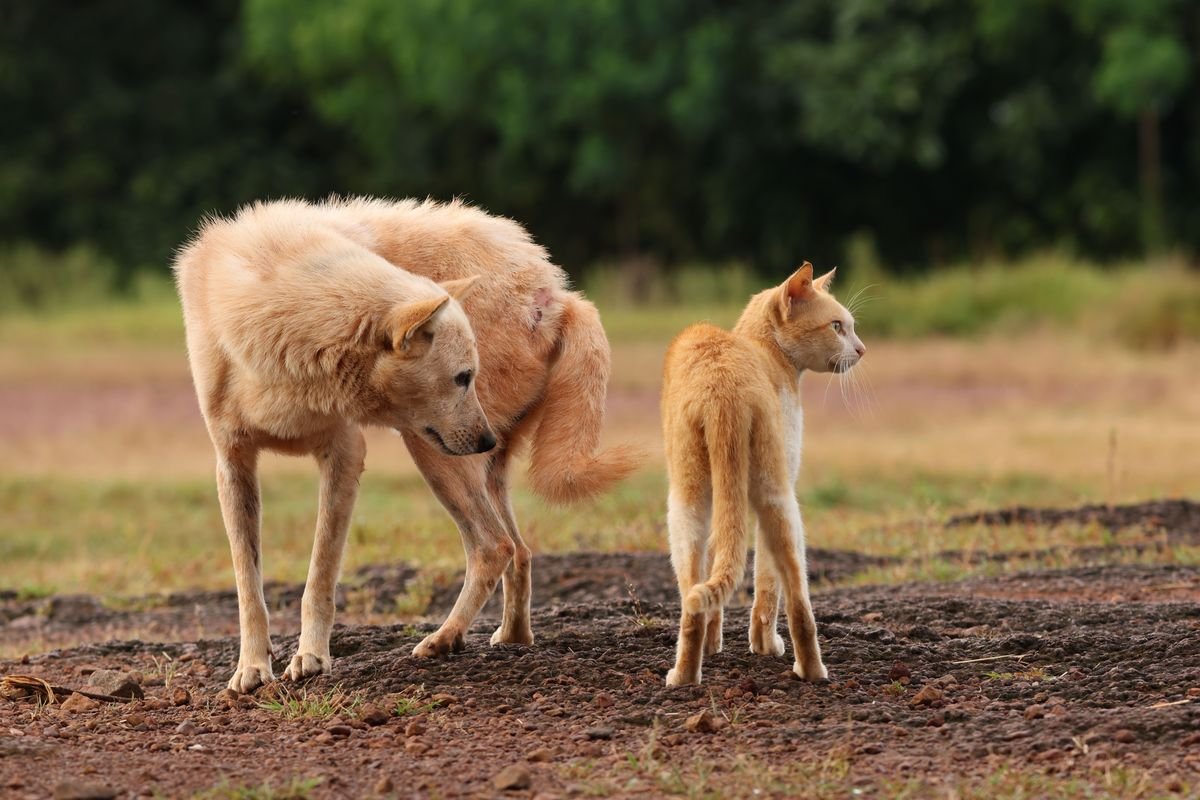
When it comes to the animal kingdom’s olfactory champions, dogs often steal the spotlight. But how do cats measure up? The question ‘do dogs or cats have better smell’ is more than a curiosity; it touches on evolution, anatomy, and behavior. In short, dogs win this contest by a large margin. However, cats possess a remarkable sense of smell that is finely tuned for their own predatory and social needs. This article dives into the numbers, biology, and practical implications of each species’ nose.
The Science of Smell: How Olfaction Works
Smell, or olfaction, begins when odor molecules enter the nose and bind to receptor cells in the olfactory epithelium. These cells send signals to the brain’s olfactory bulb, which processes the information. Two key factors determine olfactory ability: the number of olfactory receptor genes and the relative size of the olfactory bulb. Dogs excel in both areas. They possess around 800 million olfactory receptors, while cats have approximately 200 million. For perspective, humans have about 5 to 6 million. The canine olfactory bulb is also proportionally larger, occupying a greater percentage of the brain compared to cats.
The Dog’s Olfactory System: Built for Scent
Dogs are scent-driven animals. Their noses are designed to capture and analyze odors with incredible precision. The structure of a dog’s nose includes a specialized fold of tissue that helps direct airflow to the olfactory region, and they can sample air continuously without disrupting breathing. Dogs also have a second smelling system, the vomeronasal organ (Jacobson’s organ), which detects pheromones. This combination makes dogs exceptional at tracking, detecting diseases, and even sensing emotions.
Breeds with flat faces, like pugs, have slightly less olfactory capability due to compressed nasal passages, but overall, every dog outperforms cats in scent detection. The part of a dog’s brain devoted to analyzing smells is about 40 times larger than that of a human, and many times larger than a cat’s. This neural real estate allows dogs to differentiate between similar scents and remember them over time.
How Dogs Use Their Smell in Daily Life
For dogs, smell is their primary way of understanding the world. They identify people, animals, and objects by scent. They can detect changes in human hormones, such as fear or excitement, and even sniff out medical conditions like low blood sugar or cancer. Working dogs rely on their noses for search and rescue, drug detection, and hunting. This reliance on olfaction is deeply ingrained; a dog’s brain dedicates more resources to smell than to vision.
The Cat’s Olfactory System: Subtle but Powerful
Cats are often underestimated in their olfactory abilities. While they have far fewer olfactory receptors than dogs, they still possess a highly developed sense of smell that is several times more sensitive than a human’s. Cats use their noses for hunting, social communication, and evaluating food. The feline vomeronasal organ is well developed; cats often use a ‘flehmen response’ to draw scents into this organ, analyzing pheromones from other cats or prey.
A cat’s sense of smell is critical for survival. For example, a kitten relies on scent to find its mother’s nipple and to bond. Adult cats use scent marking to establish territory and communicate with other felines. However, when directly compared to dogs, cats are not as adept at following long scent trails or discriminating between complex odor mixtures. Their olfactory system is optimized for close-range detection rather than long-distance tracking.
Cats vs. Dogs: A Direct Comparison
To answer the question plainly: dogs have a better sense of smell than cats. The difference is not subtle. Dogs have roughly four times as many olfactory receptors, a larger olfactory bulb, and a more efficient nasal anatomy. In practical tests, dogs can detect odors at concentrations parts per trillion, while cats require higher concentrations. However, cats are superior to humans and many other mammals. If we compare only raw ability, dogs are the winners. But each animal’s sense of smell is perfectly adapted to its lifestyle. A cat does not need to track a scent for miles; it relies more on stealth, hearing, and vision to catch prey. A dog, especially a pack animal, depends on scent for communication and cooperative hunting.
Evolutionary and Behavioral Implications
The difference in olfactory prowess reflects the evolutionary paths of dogs and cats. Dogs descended from wolves, which hunt in packs and use scent extensively for tracking prey and coordinating with pack members. Domestication further enhanced their ability to read human emotions via smell. Cats, on the other hand, evolved from solitary hunters like the African wildcat. Their survival strategy relies more on ambushing prey up close, using acute hearing and excellent night vision. Smell is important but secondary to these senses.
Behaviorally, dogs are more motivated by scent. They spend much of their day sniffing, and a dog that cannot use its nose often becomes frustrated. Cats also sniff, but they engage in scent-marking behaviors like rubbing and scratching, which combine smell with physical cues. The olfactory world of a dog is richer and more complex, while a cat’s olfactory system is finely tuned for specific social and predatory tasks.
Conclusion: Which Pet Has the Better Nose?
Based on pure olfactory metrics, dogs unquestionably have a better sense of smell than cats. They have more receptors, a larger dedicated brain area, and a nose engineered for scent detection. However, this does not diminish the cat’s olfactory abilities; cats are still highly skilled smellers, just on a different scale. The keyword question has a clear answer, but the context is important. If you need a partner for scent work or detection, choose a dog. If you want a pet that uses smell as part of a balanced sensory toolkit, a cat is perfectly capable. Both animals rely on their noses in ways humans cannot fathom, reminding us how diverse and specialized the animal world is.