
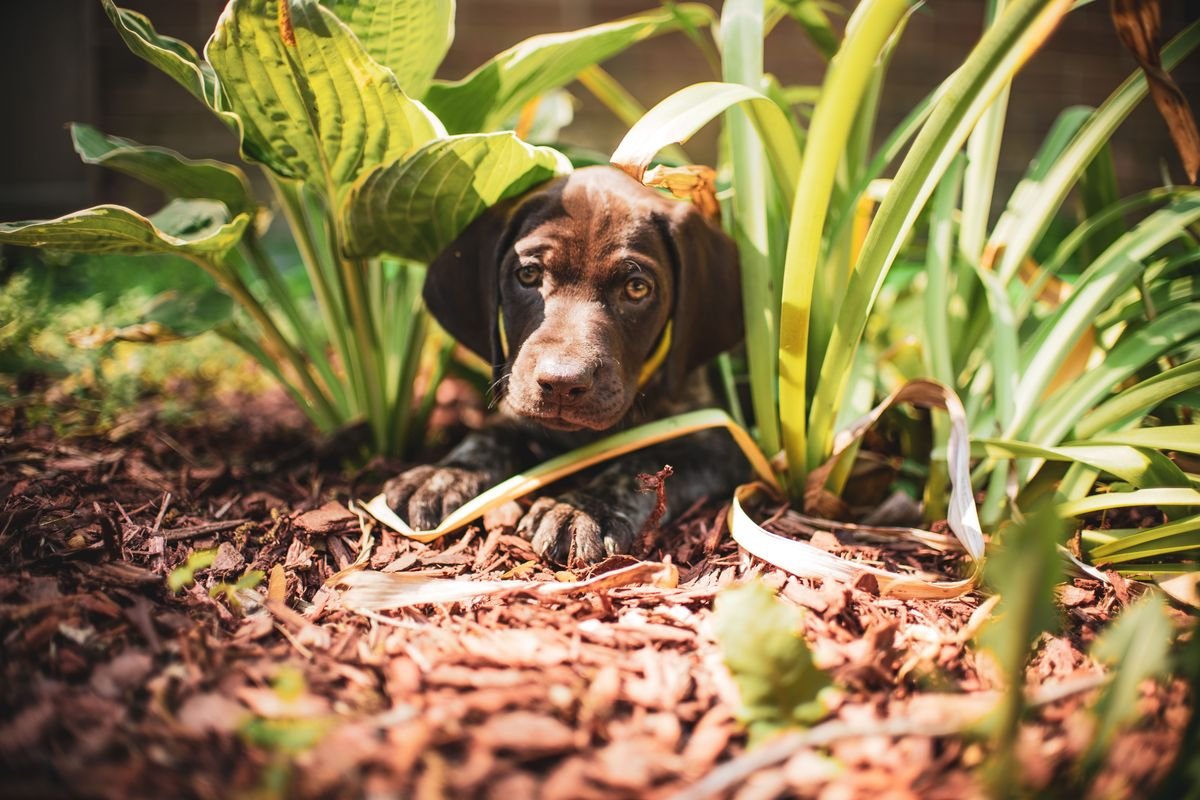
A beautifully mulched garden can be the pride of any homeowner, but if you share your yard with a dog, you may wonder: is mulch safe for dogs? The answer is not a simple yes or no because it depends on the type of mulch, the amount ingested, and your dog’s individual behavior. Some mulches contain toxic substances that can cause serious illness, while others pose physical risks like choking or splinters. This guide breaks down the most common mulch materials, their potential dangers, and how to create a dog-friendly landscape that keeps your pet safe.
Common Types of Mulch and Their Risks
Not all mulch is created equal when it comes to canine safety. Here, we examine the most popular options and what makes them risky for dogs.
Cocoa Mulch
Cocoa mulch is made from cocoa bean shells and has a chocolate-like smell that attracts dogs. Unfortunately, it also contains theobromine and caffeine, the same toxic compounds found in chocolate. Even small amounts can cause vomiting, diarrhea, hyperactivity, tremors, seizures, and in severe cases, death. Cocoa mulch is widely considered the most dangerous type for dogs. If you have a dog that likes to dig or chew, avoid cocoa mulch entirely.
Pine and Cedar Mulch
Pine and cedar mulches are popular for their pleasant aroma and natural resistance to pests. They are generally considered safe for dogs in small amounts. However, if a dog ingests a large quantity, it can cause gastrointestinal upset or intestinal blockage. Cedar mulch may also contain oils that cause mild irritation to the mouth or skin in sensitive dogs. The biggest risk with these mulches is not toxicity but physical obstruction or splinters.
Rubber Mulch
Rubber mulch is made from recycled tires and is often used in playgrounds for its cushioning effect. While it is non-toxic, it can still be harmful if ingested. Rubber pieces can cause choking or become lodged in the digestive tract, requiring surgery. Additionally, rubber mulch may contain heavy metals or chemical residues from the manufacturing process. Dogs that chew or eat non-food items are especially at risk. Most veterinarians advise against using rubber mulch in areas accessible to dogs.
Cypress Mulch
Cypress mulch is derived from cypress trees and is often used for its durability and resistance to decay. It is generally considered safe for dogs, but it can still cause gastrointestinal upset if eaten in large amounts. The wood fibers may also splinter, posing a risk to paws or the mouth if your dog digs or chews. As with any mulch, supervision is recommended.
Other Organic Mulches
Hemlock, eucalyptus, and other organic mulches are less common but can also present risks. Hemlock is toxic if ingested, while eucalyptus contains oils that can cause drooling, vomiting, and weakness. Always research a specific type before using it in a dog-accessible area. In general, the safest organic multipurpose mulches for dogs are those made from non-toxic wood sources and without chemical additives.
How Dogs Can Be Harmed by Mulch
Beyond specific toxicities, mulch poses several general hazards to dogs. Understanding these risks can help you take preventive measures.
Ingestion and Toxicity
Some dogs are compulsive chewers or eaters, and mulch can be tempting. Ingestion of toxic mulches like cocoa can lead to poisoning. Even non-toxic mulches, if eaten in quantity, can cause vomiting, diarrhea, or blockages. Always monitor your dog’s behavior in the yard and consult your vet if you suspect they have eaten a significant amount of mulch.
Choking and Blockages
Large pieces of bark, rubber chunks, or even tightly packed mulch can become lodged in a dog’s throat or intestines. This is a medical emergency that often requires surgery. Dogs that gulp food or have a tendency to swallow large objects are at higher risk. Choose finely shredded mulch if you must use organic mulch, and remove any large chunks.
Mold and Fungus
Wet mulch can grow mold, fungi, and bacteria. Some molds produce mycotoxins that are dangerous if inhaled or ingested. Dogs that dig or snuffle in mulch may inhale spores, leading to respiratory issues. Additionally, moldy mulch can cause gastrointestinal upset. Keep mulch dry and replace it if it becomes moldy.
Splinters and Sharp Particles
Rough or jagged mulch pieces can cause injuries to a dog’s paws, mouth, or eyes. Splinters can become embedded in the paw pads, leading to infection. If your dog frequently digs or runs on mulch, consider using a finer, smoother alternative or providing a designated digging area with sand or soil.
Chemical Additives
Some mulches are treated with dyes, pesticides, or weed preventers. These chemicals can leach into the soil and be ingested during grooming or direct chewing. Always purchase untreated, natural mulch from a reputable source, and avoid mulches that are labeled as ‘colored’ or ‘treated’ for use near pets.
Signs of Mulch Poisoning in Dogs
If your dog has ingested toxic mulch, symptoms may appear within a few hours. Watch for vomiting, diarrhea, excessive drooling, hyperactivity, tremors, seizures, rapid breathing, or collapse. For cocoa mulch, the signs are similar to chocolate poisoning. Contact your veterinarian or a pet poison helpline immediately if you observe any of these symptoms. Bring a sample of the mulch if possible to help with identification.
Safe Mulch Alternatives for Dog Owners
You can still enjoy a neat garden without risking your dog’s health. Consider these dog-friendly options for your landscaping.
Shredded Leaves
Fallen leaves, shredded or whole, make a free and safe mulch alternative. They are non-toxic, soft under paws, and biodegradable. However, they break down quickly and need frequent replacement. Avoid using leaves from black walnut trees, as they can contain juglone, a toxic substance to dogs.
Compost
Well-aged compost is a nutrient-rich mulch that is safe for dogs if they don’t eat large amounts. Fresh compost can contain mold or bacteria, so ensure it is fully decomposed before use. Compost is also attractive to some dogs due to the smell, so supervise them around it.
Stone or Pebbles
Decorative stones or pebbles provide a long-lasting, non-toxic ground cover. The main risk is choking or intestinal blockage if swallowed, so choose stones too large to fit in your dog’s mouth. Avoid small gravel that can stick to paws or be licked off. Smooth river rocks are a better choice than jagged stones.
Playground Rubber Mulch
If you need a cushioning surface for play areas, look for rubber mulch specifically labeled as safe for playgrounds and certified free of heavy metals. Even then, supervise your dog to prevent chewing. Some dogs may still try to eat the small pieces, so this option is not risk-free.
Wood Chips from Non-Toxic Trees
Choose wood chips from trees like pine, fir, or cedar that are not chemically treated. Avoid wood from black walnut, hemlock, or yew trees. Finely shredded chips are less likely to cause splinters. Even safe wood chips should be used in moderation and monitored.
Tips for Dog-Proofing Your Mulch
Even with safer mulch, it’s wise to take extra steps to keep your dog away from the material. Here are some practical strategies.
Supervision
Never leave your dog unsupervised in an area with mulch, especially if they are known to chew or dig. Keep a close eye on them during outdoor time. If they show interest in the mulch, redirect their attention to a toy or activity.
Training
Teach your dog a reliable ‘leave it’ command. With consistent training, you can stop them from approaching the mulch bed. Positive reinforcement with treats works well. If your dog has a strong digging instinct, provide a designated digging pit filled with sand or dirt.
Physical Barriers
Fencing or decorative edging around garden beds can prevent your dog from walking on or digging in the mulch. Low fences, chicken wire, or even large rocks can serve as effective deterrents. For raised beds, the height alone may discourage access.
Regular Maintenance
Keep the mulch layer shallow, ideally no more than 2-3 inches deep. Remove any large, sharp, or moldy pieces. Rake the mulch regularly to keep it dry and discourage pest or fungus growth. Replace the mulch annually or as needed to maintain its condition.