
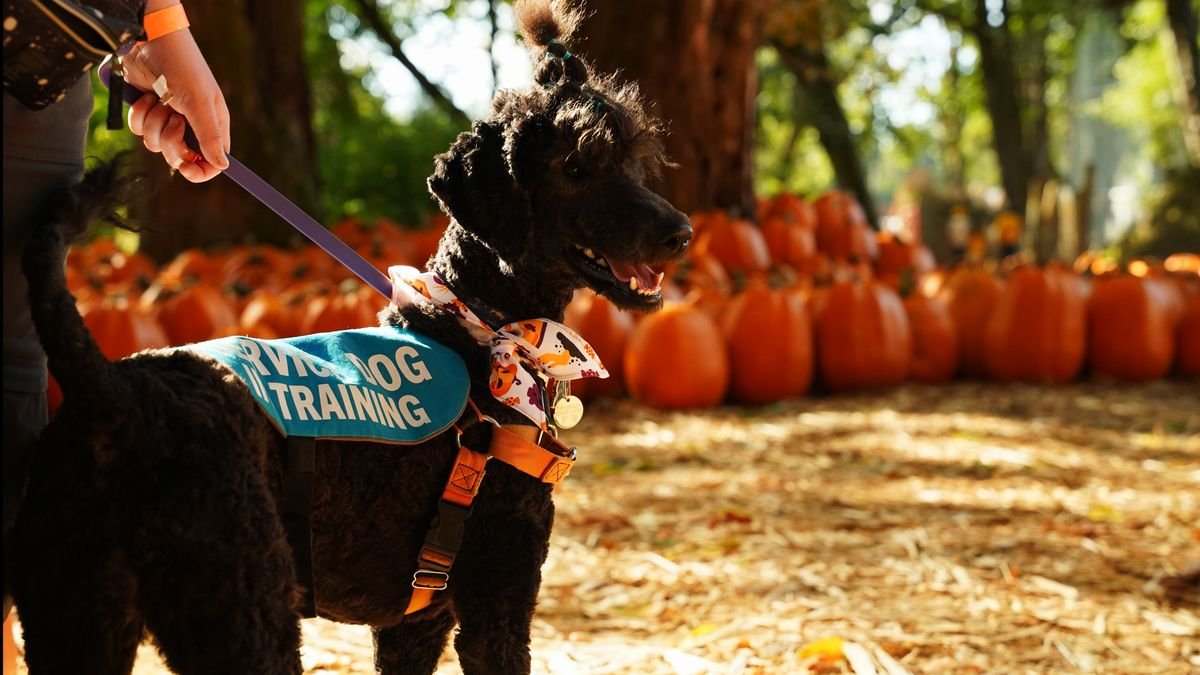
Poodles are often thought of as elegant show dogs, but their history as retrievers and water dogs hints at their versatility. Many people wonder if poodles can be service dogs. The answer is a resounding yes. With their high intelligence, trainability, and hypoallergenic coats, poodles of all sizes can excel in various service roles. However, like any breed, they have strengths and challenges that potential owners should consider.
Temperament and Intelligence of Poodles
Poodles are consistently ranked among the most intelligent dog breeds. This intelligence, combined with a strong desire to please, makes them highly trainable for complex tasks. They are alert, responsive, and generally have a steady temperament. Standard poodles are calm and confident, while miniature and toy poodles are lively and eager to learn. Their hypoallergenic coats also make them a good choice for individuals with allergies.
Types of Service Work Suitable for Poodles
Poodles can perform a wide range of service tasks due to their size options and trainability. Below are common roles where poodles excel.
Guide Dogs
Standard poodles are large enough to guide visually impaired individuals. Their intelligence and focus allow them to navigate obstacles, stop at curbs, and understand directional commands. Some guide dog programs specifically use standard poodles.
Hearing Dogs
Miniature or toy poodles are excellent hearing dogs. They can alert their handler to sounds like doorbells, smoke alarms, or crying babies. Their small size makes them easy to manage in homes and public spaces.
Mobility Assistance
Standard poodles can be trained to retrieve dropped items, open doors, and provide forward momentum or balance support for individuals with mobility challenges. Their strength and willingness to work make them suitable for such tasks.
Psychiatric Service Dogs
Poodles are often used as psychiatric service dogs for conditions like PTSD, anxiety, or depression. They are sensitive to their owner’s emotions and can perform tasks such as interrupting panic attacks, guiding a person out of a crowded area, or providing deep pressure therapy.
Medical Alert Dogs
Some poodles are trained to detect changes in blood sugar, impending seizures, or other medical emergencies. Their keen sense of smell and ability to learn specific alerts make them effective medical alert dogs, though success depends on individual aptitude.
Training a Poodle as a Service Dog
Training a poodle for service work requires dedication. Whether through a professional program or owner training, the process includes several key phases. Early socialization is crucial to ensure the dog is comfortable in various environments. Basic obedience forms the foundation, followed by task-specific training. Poodles typically excel in formal training due to their eagerness to work, but they can also be sensitive to harsh corrections. Positive reinforcement methods work best. Public access training is essential to teach the dog to behave calmly in stores, restaurants, and on public transportation.
Pros and Cons of Using a Poodle as a Service Dog
Poodles offer many advantages as service dogs, but there are also challenges to consider.
Pros
Poodles are highly intelligent and learn tasks quickly. Their low-shedding coats reduce allergens. They come in three sizes, suitable for different types of work. They are generally healthy with a long lifespan. Their trainability and versatility allow them to adapt to many roles.
Cons
Poodles require regular grooming, which can be time-consuming and expensive. They may be prone to genetic health issues like hip dysplasia or eye problems. Some lines can be sensitive or anxious, requiring patient handling. Their high energy needs regular exercise, and they may not be the best choice for a very sedentary handler.
How to Choose a Poodle for Service Work
If you decide a poodle is right for your service needs, careful selection is critical. Look for a dog from a reputable breeder who health tests for conditions common in poodles. Temperament testing can help identify a puppy with the right drive, confidence, and focus. Standard poodles are generally preferred for physical tasks, while miniature or toy poodles suit sound alert or psychiatric work. Consider rescue poodles as well, but be aware that adult rescue dogs may have unknown histories that could affect training.
Final Thoughts: Is a Poodle Right for You?
Poodles can absolutely be service dogs, and many have successfully helped their handlers in a variety of capacities. Their intelligence, adaptability, and hypoallergenic coats make them appealing choices. However, they require commitment to grooming, training, and exercise. If you are willing to invest the time and effort, a poodle can become an outstanding service partner. Always consult with a professional trainer or service dog organization to determine if this breed aligns with your specific needs.